Finasteride vs Dutasteride for Hair Loss (2026): Which One, When, and Why
📌 TL;DR
- Dutasteride blocks both 5α-reductase Type I and Type II; finasteride only blocks Type II. That translates to roughly 90% DHT suppression for dutasteride vs about two-thirds for finasteride.
- Head-to-head trials (Olsen 2006, Gubelin Harcha 2014) show dutasteride 0.5 mg/day outperforms finasteride 1 mg/day on hair count at 24 weeks. A network meta-analysis (Gupta 2014) is consistent with dutasteride's edge.
- Dutasteride is FDA-approved only for benign prostatic hyperplasia in the US. For AGA it is on-label only in South Korea and Japan — everywhere else, off-label.
- Finasteride half-life ~6–8 hours. Dutasteride half-life ~5 weeks. If side effects appear, finasteride clears in days; dutasteride takes months. Plan accordingly.
- Default starting point for most men: finasteride 1 mg/day. Consider dutasteride if you're a documented finasteride non-responder after 12 months, or if you live in a country where AGA dutasteride is on-label and properly monitored.
Finasteride vs Dutasteride for Hair Loss (2026): Which One, When, and Why
Last updated: May 2026 | Written by RK
Both drugs block the enzyme that converts testosterone into dihydrotestosterone (DHT) — the hormone driving androgenetic alopecia. They’re often discussed as if they’re interchangeable, escalating versions of the same thing. They’re not. Dutasteride suppresses around 90% of DHT vs roughly two-thirds for finasteride; it’s also FDA-approved for hair loss in exactly two countries, costs three to five times more, and has a half-life measured in weeks instead of hours.
If you’ve already read the DHT pillar explainer on what DHT is and why Type I vs Type II 5α-reductase matters, this article picks up where that left off — the practical decision. Which one to start, when to escalate, and the real reasons most dermatologists default to finasteride.
Finasteride for Androgenetic Alopecia
CLM-COND-androgenetic-alopecia-INT-finasteride-001
Small RCT base, direction consistent but samples small; "may consider".
- Professional Society — stance: supportive
"The U.S. Food and Drug Administration (FDA) approved this medication to treat male pattern hair loss. When taken as directed, finasteride can: Slow down hair loss [and] Stimulate new hair growth. Finasteride is a pill that you take once a d…"
Source → - U.S. FDA — stance: supportive
"Sexual dysfunction that continued after discontinuation"
Source → - NHS (UK) — stance: cautious
"Finasteride and minoxidil are the main treatments for male pattern baldness. ... Finasteride and minoxidil are not available on the NHS. ... Both can have side effects, and they do not work for everyone. ... For benign prostate enlargement,…"
Source → - WHO — stance: cautious
"Finasteride has an established WHO International Nonproprietary Name (INN). It is NOT listed on the WHO Model List of Essential Medicines (24th edition, 2025); BPH/androgenetic alopecia treatments are generally outside EML scope. VigiBase (…"
Source → - PubMed (NIH)
"Finasteride in the treatment of men with androgenetic alopecia (Propecia phase III pivotal)"
Source → - PubMed (NIH)
"Finasteride in the treatment of men with frontal male pattern hair loss (Leyden 1999)"
Source → - PubMed (NIH)
"Efficacy and tolerability of finasteride 1 mg in men aged 41 to 60 years with male pattern hair loss (Whiting 2003)"
Source →
Dutasteride for Androgenetic Alopecia
CLM-COND-androgenetic-alopecia-INT-dutasteride-001
≥1 quality MA + ≥3 consistent RCTs; society conditional recommendation.
- U.S. FDA — stance: supportive
"AVODART is a 5 alpha-reductase inhibitor indicated for the treatment of symptomatic benign prostatic hyperplasia (BPH) in men with an enlarged prostate to: improve symptoms, reduce the risk of acute urinary retention (AUR), and reduce the r…"
Source → - NHS (UK) — stance: cautious
"Dutasteride. Indications and dose — Benign prostatic hyperplasia. By mouth. For adult: 500 micrograms once daily, review treatment at 3–6 months and then every 6–12 months. ... Contra-indications: Women; children. ... Cautions: Patients sho…"
Source → - WHO — stance: not_addressed
"Finasteride and dutasteride: prostate cancer (WHO Drug Information / WHO Pharmaceuticals Newsletter signal communication)"
Source → - PubMed (NIH) — stance: positive
"Hair regrowth treatment efficacy and resistance in androgenetic alopecia: A systematic review and continuous Bayesian network meta-analysis"
Source → - PubMed (NIH) — stance: positive
"The efficacy and safety of dutasteride compared with finasteride in treating men with androgenetic alopecia: a systematic review and meta-analysis"
Source → - PubMed (NIH) — stance: mixed
"Effectiveness and Safety of Intralesional Dutasteride in Patients With Androgenic Alopecia: A Systematic Review and Meta-Analysis"
Source → - PubMed (NIH) — stance: positive
"Long-term safety and efficacy of dutasteride in the treatment of male patients with androgenetic alopecia"
Source →
The mechanism difference, in one diagram
Both drugs inhibit 5α-reductase — the enzyme that converts testosterone to DHT. The enzyme exists in two clinically relevant isoforms:
Finasteride is selective for Type II. Dutasteride is dual — both Type I and Type II. That’s the entire mechanistic difference. Everything downstream (efficacy gap, side-effect profile, half-life, cost) traces back to this one fact.
DHT suppression — the numbers
The cleanest pharmacodynamic data:
Drake 1999 + Clark 2004 + Olsen 2006 — multiple controlled studies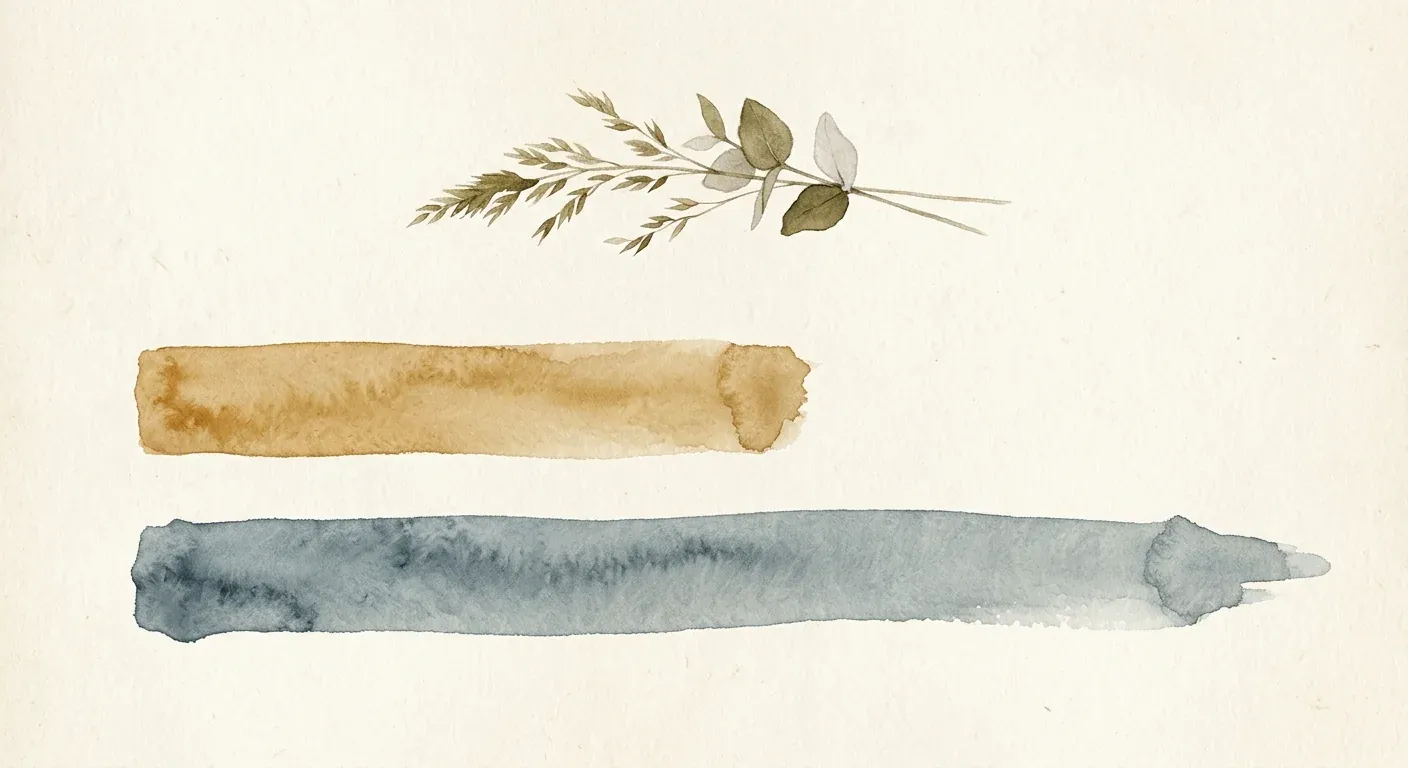
Dutasteride pushes about 20 percentage points further on scalp DHT than finasteride does at standard doses — the kind of gap that consistently shows up in hair-count data.
Notice that increasing finasteride from 1 mg to 5 mg barely moves DHT suppression — the dose-response plateaus quickly because finasteride only ever blocks one enzyme. Dutasteride breaks the plateau by blocking the other one too.
Hair count — the head-to-head trials
Two RCTs directly compared the drugs in AGA, plus a recent meta-analysis pooling them:
The Gubelin Harcha trial is the cleanest direct comparison of clinically relevant doses — the FDA-approved hair-loss dose of finasteride against the BPH dose of dutasteride. Dutasteride 0.5 mg came out statistically ahead at week 24, consistent with its deeper DHT suppression.
FDA status — why dutasteride is off-label in most of the world
In the US, getting dutasteride for AGA means a physician willing to prescribe off-label. Most dermatologists will do it for second-line or escalation cases; few will do it as first-line in someone who hasn’t tried finasteride first. Telehealth services vary — Hims and Roman generally don’t prescribe dutasteride for AGA; hair-focused services like Happy Head and XYON sometimes do.
The Korean and Japanese approvals rest on dedicated regional trials — Eun 2010 for Korea, Tsunemi 2016 for Japan — alongside the broader dutasteride evidence base. It’s not that the data is weaker outside Asia — it’s that GlaxoSmithKline never filed for the AGA indication in the US/EU. Likely commercial reasoning, given the finasteride generic landscape.
Side effects — same family, different timing
Both drugs share the same side effect profile because they target the same hormonal axis. The most commonly reported events in clinical trials:
For deep context on these numbers, see the finasteride side effects deep-dive — it walks Kaufman 1998 in detail and covers PFS, prostate cancer signal, and mood data.
The half-life difference matters more than people realize:

If a problem appears, finasteride clears in days. Dutasteride sits in the body for months.
The half-life is the strongest argument for starting with finasteride. If you tolerate it, you have a known good drug. If you don’t, you know within weeks, not months.
Cost and access (US)
The cost gap is real but the magnitude is modest on a yearly basis (~$240–540 difference). The bigger access friction is finding a prescriber comfortable with off-label dutasteride for AGA.
The decision tree
- • Cheapest viable option
- • Shortest half-life — easy to stop if needed
- • FDA-approved, 25+ years of safety data
- • Outcome at month 12 informs the next step
- • Clear evidence of inadequate Type-I-mediated DHT suppression
- • Olsen + Gubelin Harcha trials support the gain
- • Plan for half-life implications before starting
- • On-label indication in MFDS/PMDA markets
- • Stronger DHT suppression upfront
- • Still requires the half-life conversation
A few additional notes that don’t fit neatly into the tree:
- Women with FPHL: neither drug is FDA-approved for AGA in women, and finasteride 1 mg in postmenopausal women has been ineffective in trials. The decision is more nuanced — see the FPHL guide.
- Patients on antidepressants: SSRIs and 5α-reductase inhibitors both affect neurosteroid pathways. A shared decision with a psychiatrist is worth having if you’re on long-term SSRIs.
- Pre-fatherhood planning: both drugs lower DHT, which has a small documented effect on semen parameters. The conservative move is to delay starting until family planning is complete, or to plan a 3-month washout before conception attempts (manageable for finasteride; harder for dutasteride).
What about topical formulations?
Topical finasteride has emerged as a real alternative for patients with side-effect concerns. The systemic absorption is reduced (though not zero), and head-to-head data with oral finasteride suggests comparable efficacy.
- Topical finasteride spray: FDA-approved in some markets (e.g., Petalo by Polichem). In the US, available via compounding pharmacies and a few telehealth services.
- Topical dutasteride: Much less data. Most preparations are compounded specifically for clinics that already prescribe it. The half-life concern partially carries over because some systemic absorption still occurs.
- Mesotherapy with dutasteride: Direct scalp injection of dilute dutasteride. Small case series suggest efficacy with reduced systemic exposure, but the evidence base is too thin to make a routine recommendation.
For most patients exploring topicals, start with topical finasteride. The data is better and the formulation choice is wider.
When to actually switch from finasteride to dutasteride
Three patterns that justify the switch:
1. Documented finasteride non-response
On 1 mg/day for 12+ months, with consistent application (not skipping doses), and AGA continues to progress per standardized photos or trichoscopy. This is the cleanest indication.
2. Plateau after early response
Initial gain at months 6–12, then steady regression. Possible upregulation of Type I 5α-reductase to compensate for blocked Type II. Dutasteride blocks both routes.
3. Concurrent BPH and AGA
If you’d already be a dutasteride candidate for benign prostatic hyperplasia (urologist-led), getting AGA benefit as a secondary effect is a clean two-for-one.
What is not a good reason to switch: vague feeling that “more must be better.” If finasteride is working for you, the marginal hair-count gain from dutasteride is modest and the half-life downside is real.
What to read next
- DHT and Hair Loss: How It Works (2026) — the pillar explainer. Read this first if the Type I vs Type II distinction was new.
- Finasteride Side Effects: What the Real Data Says (2026) — Kaufman 1998 deep-dive, PFS discussion, mood data, prostate cancer signal.
- Saw Palmetto for Hair Loss (2026) — the natural 5α-reductase inhibitor for patients avoiding prescription DHT blockers.
- Minoxidil Complete Guide (2026) — what to pair on top of either DHT blocker for the strongest evidence stack.
References
Disclaimer: This article summarizes published evidence and is not medical advice. Dutasteride is off-label for AGA in most jurisdictions, including the US and EU. Don’t source either drug from international or unverified pharmacies — counterfeit 5α-reductase inhibitors show up regularly in unregulated channels. Sexual side effects, while uncommon in trials, are real for the patients who experience them; the longer half-life of dutasteride makes the conversation before starting it more important than for finasteride.