Finasteride Side Effects: What the Real RCT Data Shows (2026)
📌 TL;DR
- RCT data (Kaufman 1998, Mella 2010 meta-analysis): sexual side effects affect 3.4–4.0% of finasteride users vs 1.9–2.4% on placebo. The difference is real but smaller than internet threads suggest.
- Most side effects resolve within weeks of stopping. Persistent symptoms (PFS) are reported by a small minority — incidence is debated, mechanism not fully understood.
- Mood: small absolute risk. Some studies (Welk 2017) show modest depression signal in young men; others find no association.
- High-grade prostate cancer: a 2003 trial signal that has been debated since. Current consensus: no increased mortality, possibly a detection-bias artifact.
- Pre-treatment checklist matters: history of mood disorders, fertility plans, baseline sexual function should all be discussed before starting.
Finasteride Side Effects: What the Real RCT Data Shows (2026)
Last updated: May 2026 | Written by RK
Open r/tressless or any AGA forum and you’ll see a steady stream of finasteride horror stories: ED that won’t go away, depression after one week, libido permanently gone, “PFS ruined my life.” Open the Kaufman 1998 trial paper and you’ll see Phase III data showing a 3.8% sexual side effect rate vs 2.1% placebo.
Both sources are real. Neither is the whole picture.
This article is the version that respects both — the published RCT data (which is reassuring for most users) and the persistent-symptom reports (which are real for the people who experience them, even if the population incidence is small). My goal here isn’t to convince you to take finasteride or avoid it. It’s to put numbers next to the words so you can make an informed call.
Finasteride for Androgenetic Alopecia
CLM-COND-androgenetic-alopecia-INT-finasteride-001
Small RCT base, direction consistent but samples small; "may consider".
- Professional Society — stance: supportive
"The U.S. Food and Drug Administration (FDA) approved this medication to treat male pattern hair loss. When taken as directed, finasteride can: Slow down hair loss [and] Stimulate new hair growth. Finasteride is a pill that you take once a d…"
Source → - U.S. FDA — stance: supportive
"Sexual dysfunction that continued after discontinuation"
Source → - NHS (UK) — stance: cautious
"Finasteride and minoxidil are the main treatments for male pattern baldness. ... Finasteride and minoxidil are not available on the NHS. ... Both can have side effects, and they do not work for everyone. ... For benign prostate enlargement,…"
Source → - WHO — stance: cautious
"Finasteride has an established WHO International Nonproprietary Name (INN). It is NOT listed on the WHO Model List of Essential Medicines (24th edition, 2025); BPH/androgenetic alopecia treatments are generally outside EML scope. VigiBase (…"
Source → - PubMed (NIH)
"Finasteride in the treatment of men with androgenetic alopecia (Propecia phase III pivotal)"
Source → - PubMed (NIH)
"Finasteride in the treatment of men with frontal male pattern hair loss (Leyden 1999)"
Source → - PubMed (NIH)
"Efficacy and tolerability of finasteride 1 mg in men aged 41 to 60 years with male pattern hair loss (Whiting 2003)"
Source →
What finasteride does, mechanistically
Finasteride is a Type II 5α-reductase inhibitor. At the 1 mg/day dose used for hair loss:
- Reduces scalp DHT by approximately 64%
- Reduces serum DHT by approximately 71%
- Has minimal effect on testosterone (small rise of ~10% as more T avoids conversion)
- Does not affect Type I 5α-reductase (skin, sebaceous glands)
For background on what DHT does and why blocking it helps hair, see DHT and Hair Loss: How It Works.
The side effects come from the same mechanism that makes the drug useful: reducing DHT in tissues where DHT plays normal physiological roles — sexual function, mood regulation, prostate growth, neurosteroid synthesis. The question for any individual user is whether the hair benefit outweighs the disruption of those other systems.
The Phase III trial data (Kaufman 1998)
The foundational evidence for finasteride safety comes from the FDA registration trials. Kaufman et al. 1998 pooled data from two 12-month placebo-controlled studies (n=1,879 men, age 18–41) [1].
Sexual side effects, year 1:
Reading the numbers: Out of 100 men on finasteride for a year, roughly 4 will report at least one sexual side effect. Roughly 2 of those would have reported one anyway on placebo (background rate). The drug-attributable excess is about 1–2 men per 100, or 1–2%.
The chart below shows that drug-attributable excess — the actual additional risk finasteride adds beyond the placebo background, per side effect:
This is the same data as the table above, but framed as “extra risk vs no treatment.” The combined absolute risk increase of ~1.7 percentage points is what dermatologists weigh against the hair benefit when prescribing.
The Mella 2010 meta-analysis [2] pooled 17 trials (n>2,000) and found similar rates: 1–2% absolute risk excess for sexual side effects. The Wessells 2003 PLESS analysis [3] — finasteride 5 mg in 3,040 men with benign prostatic hyperplasia — reached a consistent conclusion: sexual adverse events were modestly more common on the drug, and most resolved with continued use or after stopping.
Methodology caveat: Trial data is from highly selected populations (mostly men age 18–41 in Phase III, no major comorbidities, completing 12-month protocols). Real-world rates may run somewhat higher because real users include older men, people with anxiety, and people who quit early due to side effects (which censors them from “completed” data).
Year-by-year persistence
In the 5-year extension data [1], side effects mostly emerged in year 1 — by year 2 onward, most reporters had either resolved or stopped the drug. The rates didn’t accumulate over time the way some forum narratives suggest. If you tolerate finasteride for the first year, you’re likely to tolerate it long-term.
Reversibility — what happens when you stop
For the great majority of finasteride users who experience side effects:
- Sexual side effects typically resolve within 2–12 weeks of cessation [1][2]
- Libido returns to baseline (or sometimes higher, due to lower-than-baseline scalp DHT being a small contributor to libido)
- Ejaculate volume normalizes (DHT is a contributor to seminal vesicle function; reducing it temporarily reduces volume)
The standard pattern: try the drug for 12 weeks. If you experience side effects you can’t tolerate, stop. Most resolve within a few months.
The honest exception: a small fraction of users report symptoms that persist after stopping — this is the post-finasteride syndrome (PFS) debate.
Post-finasteride syndrome (PFS) — the controversial part
What’s claimed: Some men report sexual, neurological, or mood symptoms that began on finasteride and persisted for months or years after stopping the drug. The PFS Foundation registry has documented thousands of self-reported cases.
What the literature shows:
- Irwig 2012 [4] surveyed 54 self-selected men with persistent sexual symptoms after stopping finasteride (81% of those approached agreed to participate), with a mean follow-up of roughly 14 months (range 9–16 months) since stopping the drug. This is a self-selected sample and can’t establish incidence — it does establish that some people experience persistent symptoms and that those experiences are clinically real for them.
- Belknap 2015 [5] analyzed FDA Adverse Event Reporting System (FAERS) data and found a signal for persistent sexual dysfunction reports.
- Trüeb 2018 [6] took the opposite, more skeptical position: reviewing a single case report, the author proposed that PFS may in some cases represent an induced delusional disorder — a psychogenic condition rather than a direct pharmacological injury — and raised the possibility of mass psychogenic illness amplified by online communities. This paper is a dissenting hypothesis, not a confirmation that PFS is “real but rare” — it should not be read as validating persistent-symptom reports as a distinct organic syndrome.
- Multiple proposed mechanisms exist: neurosteroid synthesis disruption (finasteride also blocks 3α-reductase pathways producing allopregnanolone), androgen receptor sensitization, epigenetic changes. None has been definitively confirmed.
Honest summary:
What’s likely true
A small minority of finasteride users (likely under 1%, possibly higher in self-reported populations) experience symptoms that persist after stopping. The experience is real, even if the population incidence is small and the mechanism debated.
What’s overstated
Forum narratives suggesting “finasteride almost always causes PFS” or “PFS is inevitable” don’t match either the trial data or registry data. The vast majority of users who stop tolerate the cessation without lasting symptoms.
Who should be most cautious
Men with a history of depression, anxiety disorders, or sexual dysfunction at baseline. Men under 25 (developing brain may be more sensitive to neurosteroid changes). Men with strong family history of mental health concerns. Discuss alternatives like saw palmetto or topical finasteride compounded by a pharmacy.
Mood and depression — what the data shows
Welk et al. 2017 [7] — large Canadian retrospective cohort study (n=93,197) of men on 5α-reductase inhibitors (finasteride or dutasteride) vs controls. Findings:
- Modest signal for self-harm in the first 18 months of use, particularly in older men
- Increased depression diagnoses in the same window
- Effect attenuated after 18 months — possibly because non-tolerators stopped early
Other studies:
- Several smaller cohorts find no association between finasteride and depression
- The PCPT trial (older men, n=18,882) found no mood signal
Practical interpretation: The absolute risk increase is small in any given study, but the consistency across some studies (especially Welk) means it’s not zero. If you have a history of mood disorders, this is a conversation worth having with your prescriber. Don’t start finasteride during a depressive episode or shortly after a major life stress. Mixed evidence
Prostate cancer — the FDA warning explained
This one confuses most users because the FDA label says “may increase the risk of high-grade prostate cancer” while practical data suggests the opposite.
The PCPT trial 2003 [8] — landmark 7-year RCT in men over 55:
- 25% reduction in overall prostate cancer
- Small increase in high-grade Gleason score 7+ tumors detected
- The high-grade signal triggered the FDA black-box warning
The detection-bias re-analysis (Lucia et al. 2007) [9]:
- Finasteride shrinks prostate volume by ~25% over time
- Smaller prostate = each biopsy core samples a higher proportion of tissue = higher detection sensitivity
- Adjusting for this, the high-grade “increase” mostly disappears
- Mortality data over 18-year follow-up shows no excess prostate cancer deaths in finasteride users [10]
Bottom line for hair-loss users: At 1 mg/day, you’re using finasteride for years to decades, and the prostate-cancer risk profile is reassuring (or at worst neutral). The high-grade-cancer signal is largely a detection artifact. Get a baseline PSA before starting if you’re over 40 — finasteride lowers PSA by about 50%, so future screens need to be doubled to compare against typical reference ranges.
Other concerns worth knowing about
Gynecomastia (breast tissue growth)
Reported in ~0.4% of finasteride users vs ~0.1% placebo. Reversible on stopping. If you notice breast tenderness or visible enlargement, raise with prescriber.
Fertility
Finasteride can transiently lower sperm count and motility in some users. If you’re actively trying to conceive, pause finasteride 3+ months in advance. Effects reverse on cessation.
Pregnancy contraindication (for partners)
Pregnant women must not handle crushed or broken finasteride tablets — DHT is required for normal fetal genital development. Whole tablets are coated and safe to handle. Trace amounts in semen are not clinically relevant per FDA review.
Drug interactions
Few significant drug-drug interactions. Finasteride is metabolized by CYP3A4, so CYP3A4 inhibitors (clarithromycin, itraconazole, grapefruit) raise finasteride levels modestly. Usually not clinically meaningful at 1 mg/day.
Pre-treatment checklist
Before starting finasteride, work through this list with your prescriber:
1 Baseline sexual function — establish what “normal” looks like for you. If something changes, you need a comparison.
2 Mental health history — flag any current or past depression, anxiety, or mood disorders. Defer starting if you’re in an active depressive episode.
3 Family planning timeline — if you’re trying to conceive in the next year, pause finasteride or wait.
4 Baseline PSA if you’re over 40 — finasteride halves PSA values, so future screens need adjusted reference ranges.
5 Trial period agreement — start with a 12-week trial. If side effects emerge that you can’t tolerate, stop. Don’t push through severe symptoms.
6 Lower-dose option — discuss whether 0.5 mg/day or every-other-day dosing is appropriate. The dose-response curve plateaus around 1 mg, so reductions don’t sacrifice much efficacy.
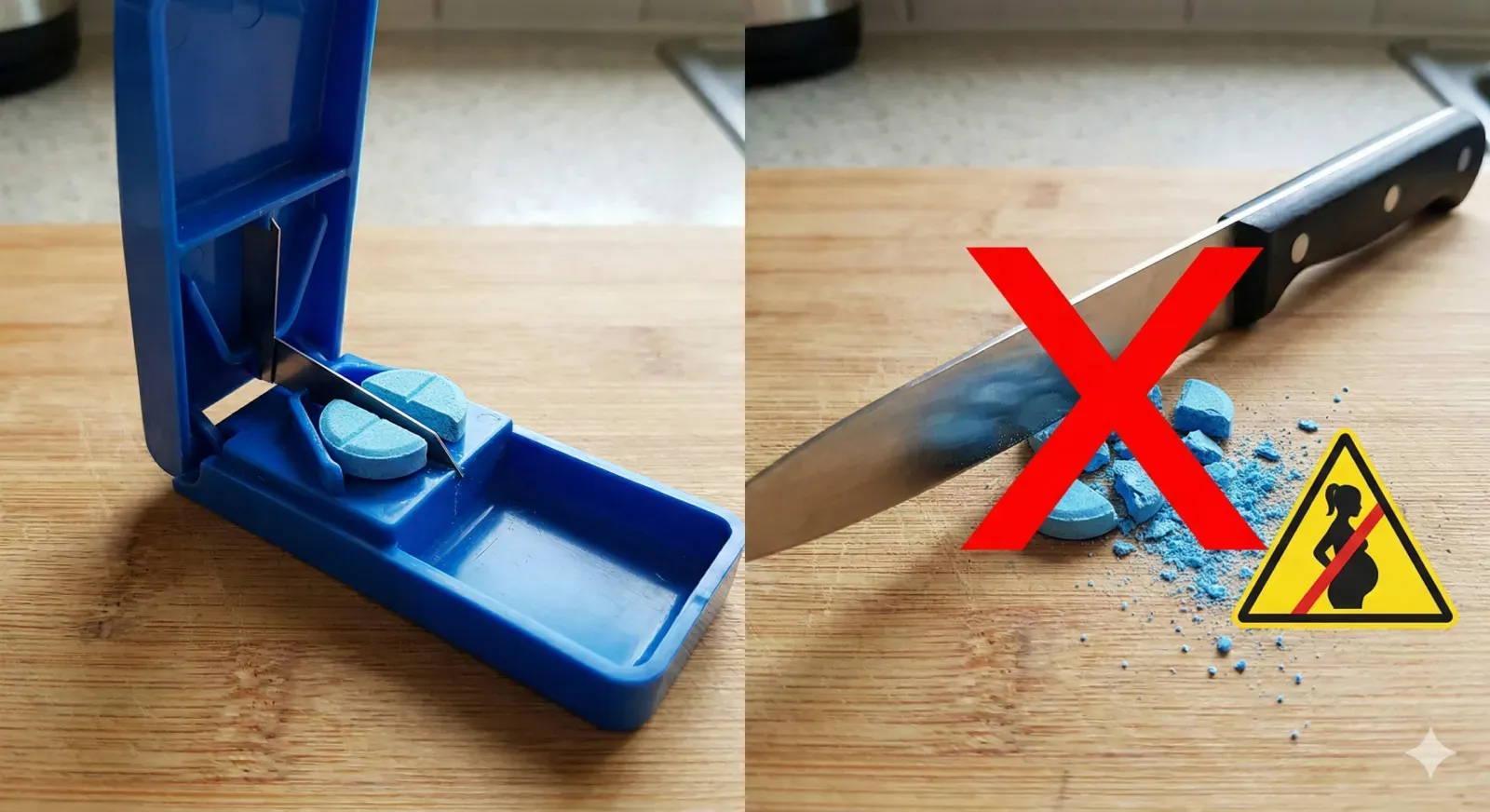
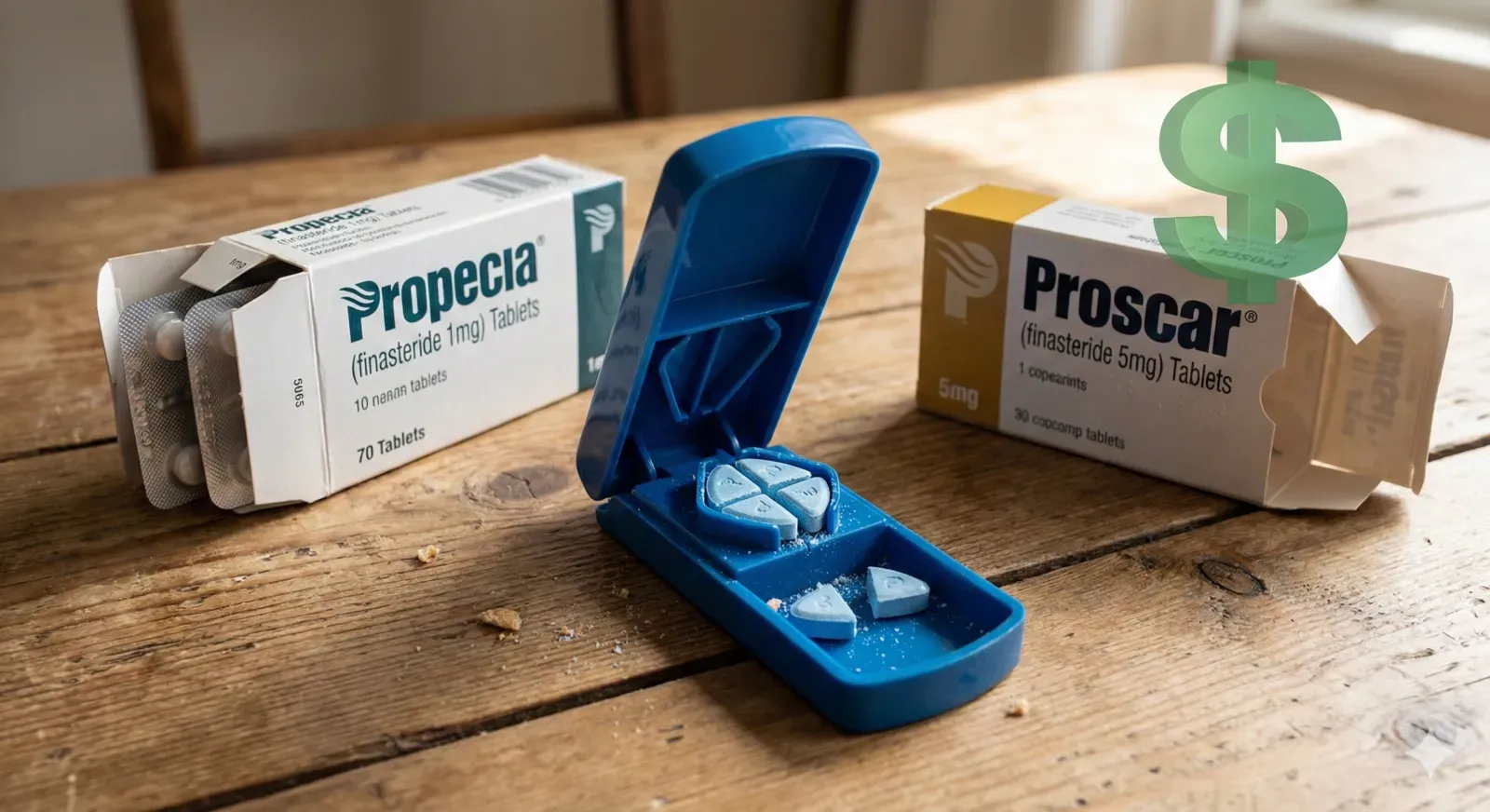
6b If you cut tablets to lower dose, use a proper pill cutter — not a knife. Uneven splits = inconsistent dose = unpredictable effect.
7 Topical finasteride alternative — compounded topical finasteride (typically 0.25%) reduces systemic DHT exposure. Less evidence than oral but a reasonable option for cautious users.
When to stop and what to expect
Stop finasteride if:
🛑 Severe sexual dysfunction that doesn’t improve over 4–8 weeks
🛑 New or worsening depression / anxiety — don’t push through; talk to a doctor
🛑 Breast tenderness or enlargement — usually reversible but needs evaluation
⚠️ Trying to conceive — pause 3+ months in advance
⚠️ Major life stress or new depressive episode — pause; revisit when stable
After stopping: most side effects resolve within 2–12 weeks. Hair gains typically reverse within 3–6 months as DHT levels normalize. The standard reversal pattern is: shedding picks up, follicles return to their pre-treatment miniaturization rate, density drifts back to where it would have been without treatment.
What to read next
- DHT and Hair Loss: How It Works — the mechanism foundation. Read this first if you haven’t.
- Saw Palmetto for Hair Loss (2026) — natural alternative at ~50–60% of finasteride’s effect with placebo-level side effects. Realistic if finasteride isn’t right for you.
- Best Hair Loss Treatments in 2026 — the decision tree for combining finasteride with topicals.
- Minoxidil for Hair Loss: The Complete Guide (2026) — the topical that pairs with finasteride. Different mechanism, complementary effect.
- Finasteride for Hair Loss: The Complete Guide (2026) — the full picture: efficacy, dosing, and how to start, with these side effects in context.
- Post-Finasteride Syndrome (2026) — the persistent-symptom question, examined honestly.
- Topical Finasteride for Hair Loss (2026) — the lower-systemic-exposure route worth considering if side effects are the concern.
References
Disclaimer: This article is personal research and review. It is not medical advice. Decisions about finasteride should be made with a licensed physician who can evaluate your individual risk factors, family history, and current health status. If you experience severe or persistent symptoms on finasteride, stop and seek medical evaluation rather than continuing to push through.