Saw Palmetto vs Finasteride (2026): Is the Natural DHT Blocker as Good as the Drug?
📌 TL;DR
- Both saw palmetto and finasteride work on the same target — 5α-reductase, the enzyme that converts testosterone to DHT — but they are not in the same weight class. Finasteride is a potent, selective, FDA-approved inhibitor; saw palmetto is a weak, partial, reversible botanical inhibitor with much less certain potency.
- On effectiveness, the drug wins clearly. The one direct comparative study (Rossi 2012) found finasteride improved hair in about 68% of men over two years versus about 38% for saw palmetto — and finasteride was especially better at the crown. Finasteride also has decades of large RCTs behind it; saw palmetto has a handful of small, mixed studies.
- On side effects, saw palmetto wins. It is generally well tolerated with side-effect rates close to placebo, which is its main appeal — it is the option many finasteride-averse men reach for. Finasteride's sexual side effects, though uncommon (about 1.7 percentage points above placebo), are the reason saw palmetto gets searched for at all.
- The honest framing: finasteride is the more effective, better-evidenced treatment; saw palmetto is a reasonable lower-risk, lower-reward option for men who will not take the drug. They are not equivalent, and presenting saw palmetto as 'natural finasteride' overstates it.
- A telling detail: in benign prostatic hyperplasia — where saw palmetto is most studied — a large Cochrane review found it no better than placebo. That does not prove it fails for hair, but it should temper expectations about how strong its 5α-reductase effect really is.
Saw Palmetto vs Finasteride (2026): Is the Natural DHT Blocker as Good as the Drug?
Last updated: June 2026 | Written by RK
It is one of the most-searched questions in hair loss: can a natural supplement do what the prescription drug does? Saw palmetto and finasteride both attack the same enzyme — the one that makes the hair-loss hormone DHT — and that shared mechanism is the basis for saw palmetto being marketed as “nature’s finasteride.” The pitch is appealing: the benefit of the drug without the prescription, the cost, or the side effects.
The honest answer is more lopsided than the marketing suggests. Both do work on the same target, but they are not in the same weight class — one is a potent, FDA-approved drug with decades of trial data, the other a weak botanical with limited and mixed evidence. This article is the head-to-head: how each works, what the comparative data actually show, the side-effect trade-off that drives the whole question, and who each one is genuinely for. For the standalone deep dives, see saw palmetto for hair loss and the finasteride complete guide.
Same target, very different tools
Both compounds work by inhibiting 5α-reductase, the enzyme that converts testosterone into dihydrotestosterone (DHT) — the androgen that miniaturises genetically susceptible scalp follicles. Lower the DHT, slow the miniaturisation. That shared mechanism is real, and it is why saw palmetto gets compared to finasteride at all. But the degree of inhibition is where they diverge sharply.
Finasteride is a designed molecule: a selective, near-irreversible inhibitor of 5α-reductase type II that drops scalp DHT by around 64% at the standard 1 mg dose [1]. Saw palmetto’s active fatty acids and phytosterols inhibit the same enzyme, but weakly, partially, and reversibly — and crucially, the actual magnitude of DHT suppression from saw palmetto in humans has never been well quantified. “It inhibits 5α-reductase” is true for both; the size of that inhibition is not remotely comparable. For the deeper biology, see DHT and hair loss explained.
What the head-to-head evidence shows
Rossi 2012 direct comparison + decades of finasteride RCTs vs limited saw palmetto dataThe single most useful study is Rossi 2012, which directly compared the two in 100 men with mild-to-moderate androgenetic alopecia over two years — finasteride 1 mg/day versus saw palmetto 320 mg/day [2]. The results were clear in direction:
- Finasteride improved hair growth in about 68% of men; saw palmetto in about 38%.
- Finasteride was notably better at the crown (vertex), where it tends to perform best, while saw palmetto’s modest benefit was more limited.
- Saw palmetto did help a subset of men — it was not inert — but it was the weaker performer on every measure.
That single comparison sits on top of a much larger asymmetry in the broader evidence. Finasteride has decades of large, randomised, placebo-controlled trials behind it — most famously the Kaufman 1998 pivotal study in 1,879 men, where roughly nine in ten either held or regrew hair over two years [3]. Saw palmetto has only a handful of small studies, of mixed quality and mixed results; a 2020 systematic review concluded the evidence is limited and preliminary, supporting modest possible benefit but well short of the drug’s standard [4][5].
One sobering data point from outside hair loss: in benign prostatic hyperplasia — the condition where saw palmetto has been studied most extensively — a large Cochrane review found it no better than placebo for urinary symptoms [6]. That does not prove it fails for hair, but it is hard to reconcile with the idea that saw palmetto is a strong 5α-reductase inhibitor, and it should temper expectations.
The side-by-side
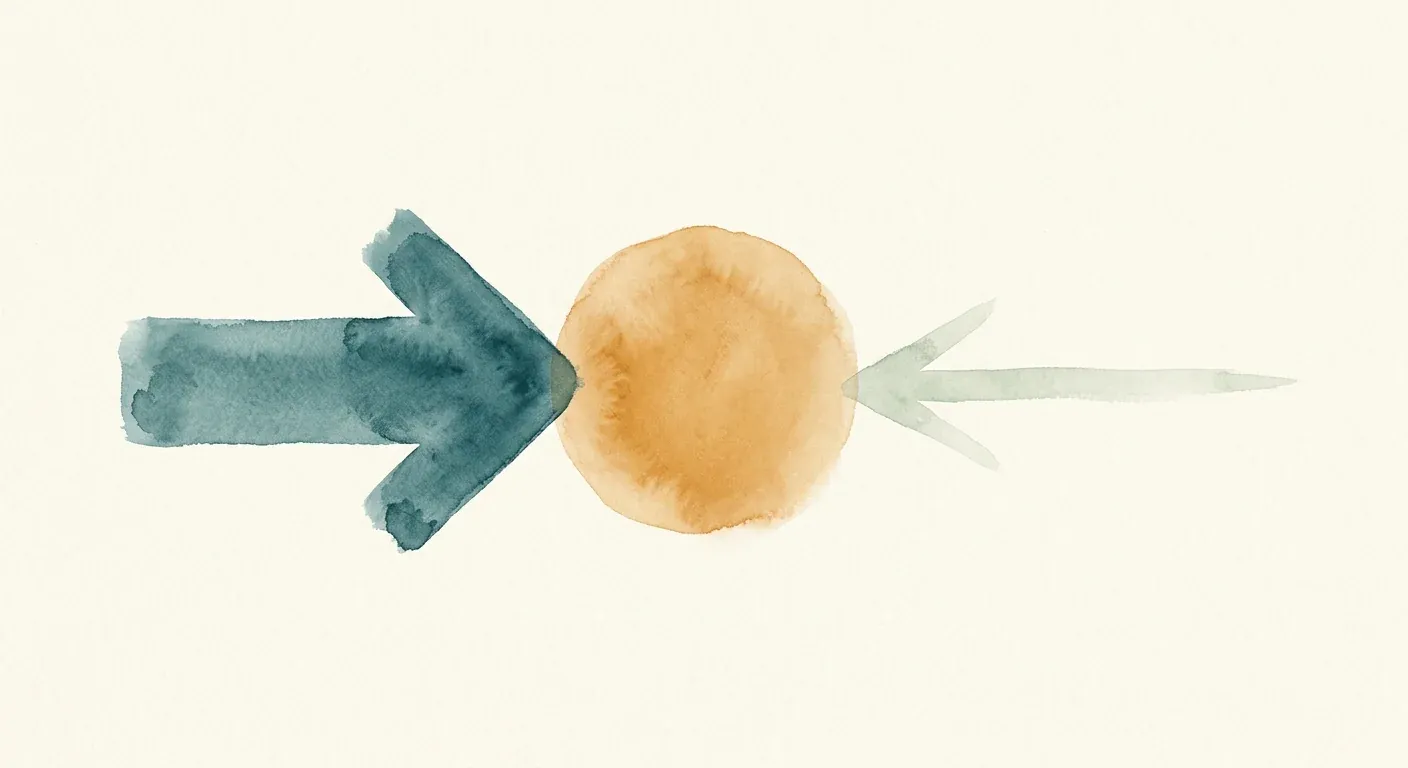
Both aim at the same enzyme; the grip is what differs. A weak, reversible hold produces a gentler effect — and gentler side effects — than a potent, near-irreversible one.
The independent evidence verdicts
The verdicts below come from a third-party evidence database that grades each intervention against androgenetic alopecia across regulators, society guidance, and meta-analyses. The gap between the two is exactly what the head-to-head suggests.
Finasteride for Androgenetic Alopecia
CLM-COND-androgenetic-alopecia-INT-finasteride-001
Small RCT base, direction consistent but samples small; "may consider".
- Professional Society — stance: supportive
"The U.S. Food and Drug Administration (FDA) approved this medication to treat male pattern hair loss. When taken as directed, finasteride can: Slow down hair loss [and] Stimulate new hair growth. Finasteride is a pill that you take once a d…"
Source → - U.S. FDA — stance: supportive
"Sexual dysfunction that continued after discontinuation"
Source → - NHS (UK) — stance: cautious
"Finasteride and minoxidil are the main treatments for male pattern baldness. ... Finasteride and minoxidil are not available on the NHS. ... Both can have side effects, and they do not work for everyone. ... For benign prostate enlargement,…"
Source → - WHO — stance: cautious
"Finasteride has an established WHO International Nonproprietary Name (INN). It is NOT listed on the WHO Model List of Essential Medicines (24th edition, 2025); BPH/androgenetic alopecia treatments are generally outside EML scope. VigiBase (…"
Source → - PubMed (NIH)
"Finasteride in the treatment of men with androgenetic alopecia (Propecia phase III pivotal)"
Source → - PubMed (NIH)
"Finasteride in the treatment of men with frontal male pattern hair loss (Leyden 1999)"
Source → - PubMed (NIH)
"Efficacy and tolerability of finasteride 1 mg in men aged 41 to 60 years with male pattern hair loss (Whiting 2003)"
Source →
Saw Palmetto for Androgenetic Alopecia
CLM-COND-androgenetic-alopecia-INT-saw-palmetto-001
Small RCT base, direction consistent but samples small; "may consider".
- NIH Office of Dietary Supplements — stance: cautious
"saw palmetto is probably not helpful for urinary tract symptoms associated with prostate enlargement in men. The evidence is too limited to allow conclusions to be reached [for male-pattern hair loss]. Serenoa repens, at two and three times…"
Source → - U.S. FDA — stance: cautious
"Saw palmetto is not the subject of an applicable USP or NF monograph, is not a component of an FDA-approved human drug, and does not appear on the 503A bulks list."
Source → - EFSA (EU) — stance: neutral
"1,548 claims on 'botanicals' have been placed on hold by the Commission pending further consideration on how to proceed with these"
Source → - NHS (UK) — stance: against
"Your doctor should not offer you homeopathy, herbal treatments or acupuncture to treat urinary symptoms ... there is not enough reliable evidence about how well they work or how safe they are. ... [Saw palmetto] was no more effective than a…"
Source → - WHO — stance: neutral
"WHO monographs on selected medicinal plants - Volume 2"
Source → - PubMed (NIH)
"A randomized, double-blind, placebo-controlled trial to determine the effectiveness of botanically derived inhibitors of 5-alpha-reductase in the treatment of androgenetic alopecia"
Source → - PubMed (NIH)
"Comparitive effectiveness of finasteride vs Serenoa repens in male androgenetic alopecia: a two-year study"
Source →
Which one is for you?
- • Roughly double the response rate of saw palmetto (Rossi 2012)
- • Decades of large RCTs behind it
- • Side-effect risk is small and mostly reversible
- • Side effects close to placebo
- • Modest benefit in some men
- • Give it 6 months with photos; escalate if no change
- • Topical finasteride: lower systemic exposure
- • Saw palmetto trades most of the efficacy for the lower risk
- • A derm can match the option to your specific concern
- • Direct comparison favours finasteride ~68% vs ~38%
- • Saw palmetto failed to beat placebo for BPH (Cochrane)
- • "Natural finasteride" overstates the botanical
The bottom line
Saw palmetto and finasteride are not equivalent, and the popular framing of saw palmetto as “natural finasteride” sets up a disappointment. They share a target enzyme, but finasteride grips it far harder, works substantially better, and is backed by an incomparably larger evidence base. What saw palmetto offers is the opposite trade: a much gentler side-effect profile in exchange for a much smaller, less certain benefit. That trade is genuinely worth it for some men — the ones who will not take finasteride under any circumstances and want a low-risk botanical with a plausible mechanism. For everyone willing to accept finasteride’s small risk in exchange for its real effectiveness, the drug is the better tool. Pick based on which side of that trade you are actually on, not on the marketing word “natural.”
What to read next
- Saw Palmetto for Hair Loss (2026) — the standalone deep dive on the botanical, dosing, and what the evidence really shows.
- Finasteride Complete Guide (2026) — the full picture on the drug: efficacy, dosing, how to start.
- Finasteride Side Effects: What the Real RCT Data Shows (2026) — the side-effect data that drives the whole saw-palmetto question.
- Pumpkin Seed Oil for Hair Loss (2026) — the other natural 5α-reductase-targeting supplement, often paired with saw palmetto.
References
Disclaimer: This article is educational, not prescriptive. Finasteride is a prescription drug requiring a clinician and informed consent about its side effects; saw palmetto is a supplement whose quality varies between brands and which is not a regulated equivalent of the drug. Treatment choice should reflect your own risk tolerance, fertility plans, and goals, discussed with a dermatologist — not a marketing equivalence between a botanical and a drug.