Microneedling Safety: Infection Prevention and What to Watch For (2026)
📌 TL;DR
- Microneedling at 1.5 mm punctures skin hundreds of times per session — sterility is the single biggest factor that decides whether it's safe or hazardous.
- The protocol: 70% isopropyl alcohol soak for 5–10 minutes before and after every session; inspect every needle under bright light; replace the roller every 10–15 sessions; never share.
- Three reactions look similar and need different responses: normal post-session redness (settles 12–48 hr), allergic / irritant contact dermatitis (sharp-bordered, itchy), and folliculitis or bacterial infection (pustules, expanding warmth, sometimes fever).
- Permanent risks are uncommon but real: bacterial folliculitis treated late can scar, and scarring on the scalp means permanently dead follicles in that zone — the opposite of the desired outcome.
- Don't microneedle at all if: active scalp infection, dermatitis, open wounds, bleeding disorder or therapeutic anticoagulant, keloid-prone skin, or uncontrolled diabetes/immunosuppression. The benefit is not worth those risks.
Microneedling Safety: Infection Prevention and What to Watch For (2026)
Last updated: May 2026 | Written by RK
A 1.5 mm dermaroller punctures the scalp roughly 1,200 times per session. Done right, those micro-channels close cleanly within hours and trigger the wound-healing cascade that drives the benefit. Done sloppily, they’re an infection route — and an infected scalp can scar, and a scarred scalp doesn’t grow hair. The safety question is not “does microneedling work” — it does. It’s “are you respecting that you’re puncturing skin?”
This is the safety deep-dive that the main dermaroller microneedling guide summarizes briefly. It covers infection prevention, the differential between normal redness and a real problem, the escalation ladder, and the contraindications that mean you should not microneedle at all.
The anatomy of risk
Every microneedling risk traces back to one of three things:
All three are preventable. None are subtle. The protocol below catches all of them.
The sterile protocol — load-bearing safety step
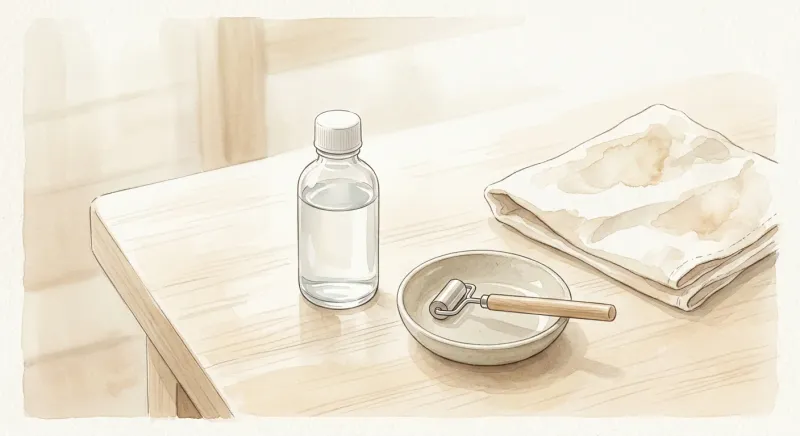
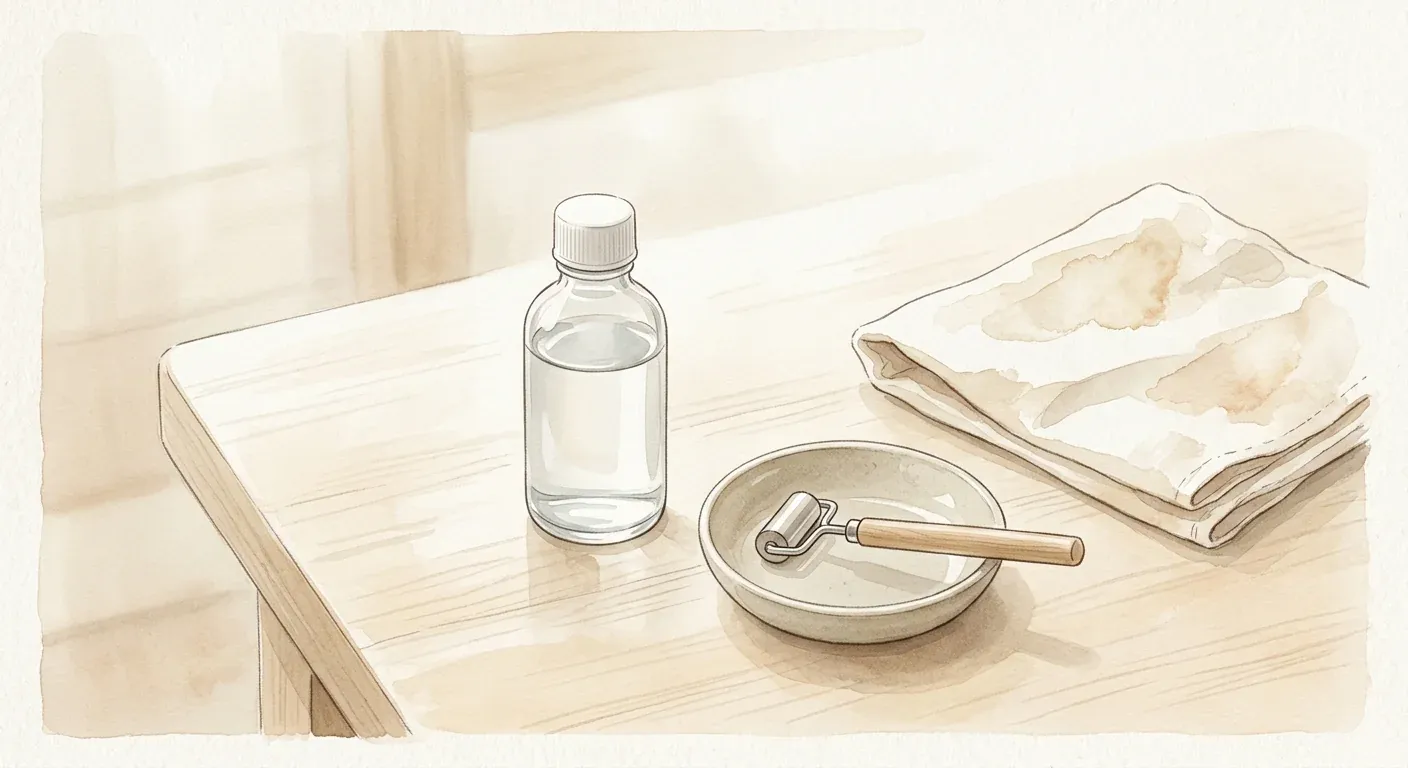
Standard procedural sterility — not optional at 1.5 mm depthBefore Soak the roller head fully submerged in 70% isopropyl alcohol for 5–10 minutes. Don’t shortcut. Wash hands. Clean the scalp with a mild shampoo and dry fully.
Inspect Under good light, look across every needle. Any bent, burred, or rusted needle = retire the roller immediately. One bent needle is enough.
During Light pressure — let the needles do the work. Stop if pain is sharp or bleeding is more than pinpoint. 8–10 passes per direction is enough; more is not better.
After Re-soak in alcohol for 5–10 minutes; let it dry fully before storing in its case. A damp roller breeds bacteria between sessions.
Replace Every 10–15 sessions, or sooner if any needle damage shows up. Dull needles bruise instead of puncturing — that’s both ineffective and infection-prone.
Never Share a roller with anyone. It’s a single-person tool, like a toothbrush. Blood-borne transmission risk is real even if you can’t see blood on the head.
If you can’t commit to this protocol consistently, microneedling isn’t a fit for you. Switch to oral or topical-only treatment.
Normal post-session redness vs a real problem
The three things you might see after a microneedling session look superficially similar and need very different responses.
The most useful single distinction: time course. Normal post-session redness fades. Allergic reactions plateau and itch. Infections expand and develop pustules. If what you’re seeing is getting worse after 48 hours, it’s not the wound-healing.
The right post-session care is minimal: clean scalp, no fragranced products for 24 hours, no aggressive scrubbing. Less is more.
The escalation ladder
- • No action needed
- • Resume the protocol on schedule
- • Just track in your photo log
- • Most likely contact dermatitis to the topical
- • Patch test if it recurs
- • See the minoxidil-irritation deep dive
- • Likely bacterial folliculitis or worse
- • Untreated infection can scar permanently
- • Antibiotics catch it cleanly when caught early
The rule of thumb: when in doubt, pause and ask a dermatologist. A two-week pause costs you nothing in long-term hair-loss progression. An untreated scalp infection can cost you follicles permanently.
Who should not microneedle at all
These contraindications are not “be careful” — they are “don’t.” The procedure is not safe for anyone in these groups.
Active scalp infection, dermatitis, or open wounds
Microneedling broken or inflamed skin amplifies whatever is already wrong. Wait until the scalp is clear, then start.
Keloid-prone skin
Microneedling deliberately triggers a wound-healing response — the same mechanism that produces keloid overgrowth in susceptible people. Keloids on the scalp are difficult to treat. Not negotiable.
Bleeding disorders or therapeutic anticoagulation
Warfarin, full-dose aspirin, DOACs — bleeding from each puncture is harder to stop. Even an over-the-counter dose of NSAID right before a session is a bad idea.
Uncontrolled diabetes or immunosuppression
Slower healing, higher infection risk. If you’re on immunosuppressants for any reason, clear this with your physician before microneedling.
Active acne or rosacea on the scalp
Microneedling pustular acne can spread the inflammation. Treat the underlying condition first.
Recent isotretinoin (within ~6 months)
Isotretinoin (Accutane) impairs wound healing for months after stopping. Conservative practice is to wait at least 6 months before any procedural skin treatment.
Permanent risk: scarring
The single worst outcome from microneedling is scarring alopecia — permanent destruction of follicles in the affected zone. It’s uncommon when the protocol is respected, but the routes to it are documented:
- Bacterial folliculitis treated late. A bacterial infection that progresses beyond the surface follicle can damage stem-cell zones and produce scarring. Treating early matters.
- Repeated trauma. Microneedling more often than the scalp can heal between sessions produces fibrosis, not normal granulation. The 2–4 week interval at 1.5 mm exists for this reason.
- Going deeper than 2.0 mm at home. The 2.5 mm+ rollers sold to home users are clinic tools. Used without anaesthesia and with imperfect technique, they cause real injury.
- Keloid response in susceptible skin. Not technically scarring alopecia but a separate disfiguring outcome.
The protocol — 1.5 mm, every 2–4 weeks, full sterilization, replace the roller — exists because each of these failure modes has happened to home users. None are theoretical.
Pause-and-restart after an incident
If something went wrong (a real reaction, an infection, an over-deep session, a broken needle that you didn’t catch), don’t just push through.
1 Stop microneedling. All non-essential post-session topicals too. Let the scalp settle.
2 Diagnose, don’t guess. If anything beyond mild redness, see a dermatologist. A diagnosis before restart saves a lot of grief.
3 Treat fully before restarting. If antibiotics were prescribed, finish the course. If it was contact dermatitis, identify and remove the trigger.
4 Replace the roller. Any roller present at the time of an incident is retired, no exceptions.
5 Restart at lower frequency. Once the scalp is fully clear (at least 2–4 weeks symptom-free), resume at every-4-weeks rather than every-2-weeks. Build back up if all is well.
What to read next
- Dermaroller & Microneedling Guide (2026) — the main protocol, needle length, and stacking with topicals.
- Microneedling Hair Results Timeline (2026) — what to expect month-by-month if the safety side is handled.
- Best Derma Rollers (2026) — choosing a tool whose build quality reduces the risks above.
- Minoxidil Scalp Irritation (2026) — the contact-dermatitis sister problem that often shows up alongside microneedling.
References
Disclaimer: This article is personal research summarizing published evidence and standard procedural sterility, and is not medical advice. Any persistent scalp redness, pustules, expanding warmth, fever, or discharge after a microneedling session warrants prompt evaluation by a dermatologist — do not treat infections by reading articles. Microneedling is not appropriate for anyone in the contraindication list above.