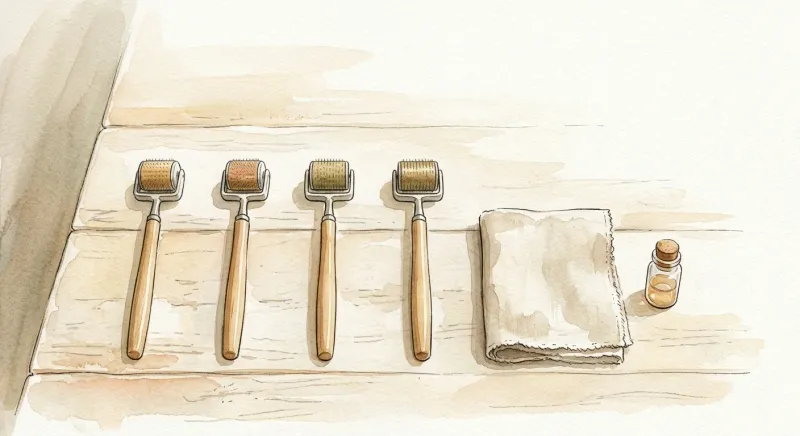
Best Derma Rollers for Hair Loss (2026): A Buyer's Guide That Skips the Junk
📌 TL;DR
- For androgenetic alopecia you want a 1.5 mm needle length — most rollers sold online are 0.25 mm 'beauty' rollers that never reach follicle depth.
- Three tool types: derma roller (cheapest, fine for the scalp), derma stamp (better for a precise hairline, no drag), derma pen (clinic-grade precision, 5–10× the price and unnecessary at home).
- Needle material matters less than build quality. A $5 generic roller with bent or wobbly needles bruises the scalp instead of cleanly puncturing it — and a bent needle is a real infection risk.
- Budget $15–30 for a decent 1.5 mm titanium or medical-steel roller, look for ISO 13485 on the packaging, and replace it every 10–15 sessions as the needles dull.
- The tool is the cheap part. Sterilization (70% isopropyl alcohol, before and after) is what actually keeps microneedling safe.
Best Derma Rollers for Hair Loss (2026): A Buyer’s Guide That Skips the Junk
Last updated: May 2026 | Written by RK
Here’s the problem with searching “best derma roller” — most of what comes back is the wrong tool. The bestselling rollers on every marketplace are 0.25 mm cosmetic rollers built for facial use, and they will do nothing for a hair follicle. Buying the wrong one was my own first mistake.
This is a buyer’s guide, not a technique guide. For how to microneedle — the protocol, frequency, and safety rules — see the complete dermaroller microneedling guide. This article is the narrower question: of the tools on the shelf, which are worth your money, and which are a waste or a hazard.
Why microneedling earns a place at all
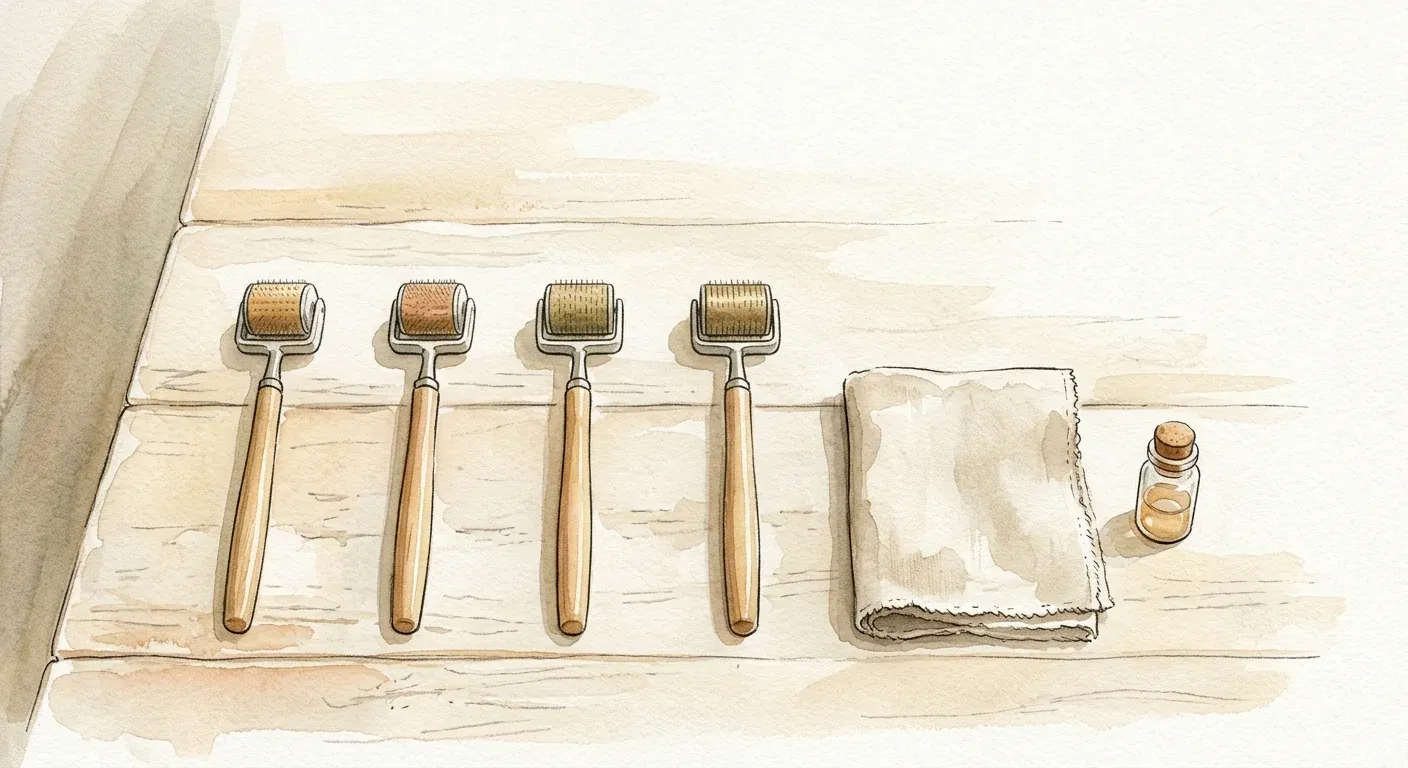
Quick context so the buying decision has a point. Microneedling for androgenetic alopecia (AGA) isn’t fringe — it has randomized-trial support.
Multiple RCTs + 2025 meta-analysisThe landmark trial is Dhurat 2013, which randomized 100 men with AGA to minoxidil alone versus minoxidil plus weekly microneedling and found the combination group did substantially better on hair count at 12 weeks [1]. Kumar 2018 reproduced the direction of effect [2], and a 2025 systematic review covering 12 RCTs (11 of which were pooled in the meta-analysis, 631 patients) confirmed that microneedling added to minoxidil significantly improves hair count over minoxidil alone [3]. The mechanism is a mix of wound-healing growth-factor signaling and improved topical absorption [4][5].
The catch the trials make obvious: the benefit was measured with proper-depth needling. A cosmetic roller can’t reproduce it. So the tool you buy actually decides whether you get the trial result or nothing.
What actually matters in a derma roller
Four things, in priority order.
Notice brand is not on this list. Derma rollers are a commodity — the same generic heads are repackaged under dozens of names. Buy on spec and build, not on the label.
Roller vs stamp vs pen — the three tool types
“Derma roller” is shorthand for a category that actually has three formats. They are clinically equivalent at matched depth — the choice is about handling, not efficacy.
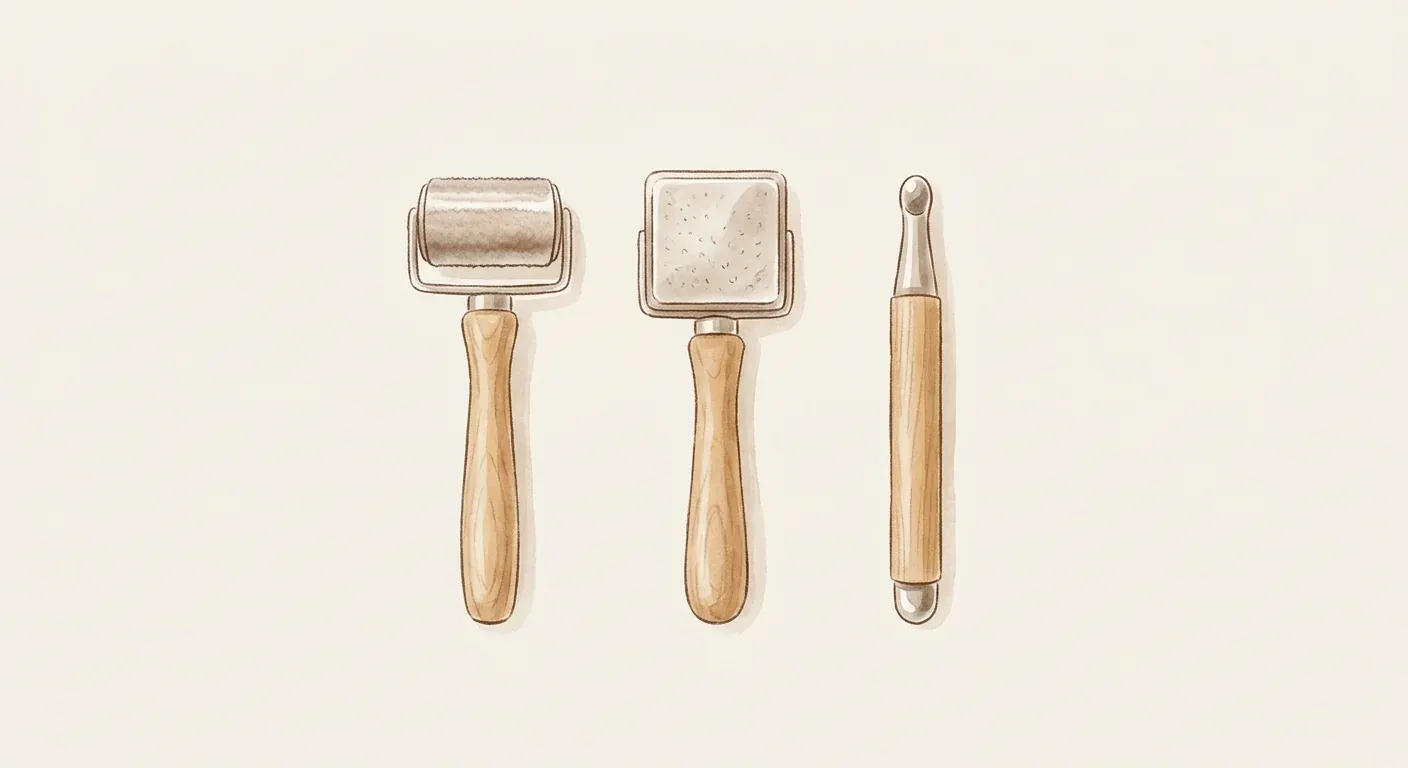
The honest verdict: a derma roller is the default. It’s cheap, it works, and the trial evidence was largely built on rollers. Choose a derma stamp instead if you mainly want to needle a precise receding hairline and the drag of a roller bothers you. A derma pen is a clinic tool that home users rarely need — buy one only if you genuinely value the depth adjustment and have the budget to spare.
How a good roller differs from a $5 one
The price gap between a $5 roller and a $25 roller is not margin — it’s manufacturing tolerance. The failure modes of the cheap ones are specific and worth recognizing.
Uneven needle depth
Needles set at slightly different heights mean some puncture and some just scrape. You get inconsistent treatment and unnecessary surface trauma. Hard to see; you feel it as uneven catch.
Bent or wobbling needles
A bent needle dragged across the scalp tears rather than punctures — ragged micro-wounds that heal worse and invite infection. Inspect the head under good light before every use; one bent needle retires the roller.
Inflated needle counts
”1080 needles!” on the box is marketing. More needles at the same length means each one penetrates less (force is spread thinner) — not better. 540 well-made needles beat 1080 badly-made ones. Ignore the count race.
Questionable sterility on arrival
A roller should arrive in a sealed sterile blister. A loose roller rattling in a printed box has unknown handling history. You’ll sterilize it anyway — but packaging signals how seriously the maker takes the rest.
None of this shows up in a product photo or a star rating. It shows up the first time you run the roller over your scalp and feel it catch unevenly. The $15–30 band buys you out of most of these problems; the $5 band does not.
Hygiene and replacement — the part that’s actually load-bearing
The tool is a one-time $20-ish purchase. The safety of microneedling comes almost entirely from what you do around it.
Sterilize Soak the head in 70% isopropyl alcohol for 5–10 minutes before and after every session. Non-negotiable — this is the single biggest safety factor.
Store dry Let it dry fully and keep it in its case. A damp roller head breeds bacteria between sessions.
Inspect Check every needle under bright light before use. Any bend, burr, or rust = retire the roller.
Replace Every 10–15 sessions. Needles dull with use; a dull roller bruises instead of puncturing. Treat the roller as a consumable, not a lifetime tool.
Never share A derma roller is a single-person tool, like a toothbrush. Blood-borne transmission risk is real.
Where to find these products
Derma rollers, stamps, and pens are sold widely — Amazon, eBay, pharmacies, beauty-supply stores, and brand websites. A medical-grade 1.5 mm titanium or stainless roller typically runs $15–30; derma stamps a similar range; derma pens $80–250 depending on brand and cartridge system. Look for 1.5 mm clearly marked on the roller-head sticker, sealed sterile packaging, and an ISO 13485 reference. Buy 70% isopropyl alcohol at any pharmacy for sterilization. Skip the $5 listings and the “1000+ needle” hype regardless of where you shop.
The buying decision
- • Cheapest tool that matches the trial evidence
- • Covers a large area quickly
- • Check the head sticker reads 1.5 mm
- • Presses straight down — no drag, cleaner control
- • Easier to stay on a narrow target zone
- • Similar price to a roller
- • No efficacy advantage over a roller at matched depth
- • 5–10× the cost plus recurring cartridges
- • Only worth it if precision genuinely matters to you
The summary in one line: buy a 1.5 mm derma roller in the $15–30 band, check the needle-length sticker before you trust the box, sterilize it religiously, and replace it every 10–15 sessions. The tool is the easy part — the protocol and safety rules are what determine whether it actually helps.
What to read next
- Dermaroller & Microneedling Guide (2026) — the technique: protocol, frequency, safety, and how to stack microneedling with minoxidil.
- Minoxidil Complete Guide (2026) — microneedling’s most-studied partner; the combination is what the trials tested.
- Best Hair Loss Treatments (2026) — where microneedling fits in the overall treatment hierarchy.
- Rogaine vs Kirkland Minoxidil (2026) — the other half of the standard at-home stack, on the buy-side.
References
Disclaimer: This article is personal research and product-category review, not medical advice. Microneedling is a controlled minor injury — sterilization is mandatory, and it is not appropriate for anyone with an active scalp infection, bleeding disorder, keloid-prone skin, or on therapeutic anticoagulants. See the full microneedling guide for contraindications before starting.