
Telogen Effluvium: The Complete Guide (2026) — Why You're Suddenly Shedding
📌 TL;DR
- Telogen effluvium (TE) is excessive shedding caused by a large batch of follicles being pushed into the resting (telogen) phase at once. The shedding shows up 2–3 months after the trigger, because that is how long the resting phase lasts.
- It is diffuse — thinning all over the scalp, a smaller ponytail, more hair in the drain — not the patterned recession of androgenetic alopecia. That distinction is the whole diagnosis.
- Acute TE (under 6 months) is self-limiting: once the trigger clears, the hair regrows. Chronic TE (over 6 months, fluctuating) is most common in middle-aged women and, despite dragging on, still does not cause baldness.
- Common triggers: childbirth, high fever or severe illness (including COVID-19), major surgery, rapid weight loss, low iron, thyroid disease, and starting or stopping certain drugs. Finding the trigger is more useful than any treatment.
- TE almost never causes true baldness — it thins, it frightens, and then it recovers. The most evidence-based 'treatment' is identifying and correcting the trigger, plus time. Worth a dermatologist visit if it lasts beyond 6 months or the pattern looks wrong.
Telogen Effluvium: The Complete Guide (2026) — Why You’re Suddenly Shedding
Last updated: May 2026 | Written by RK
It usually starts in the shower. A handful of hair in the drain where there used to be a few strands. Then it’s on the pillow, in the brush, gathering on the bathroom floor — and within a couple of weeks the ponytail feels thinner and the part looks wider. It is frightening in a way that gradual hair loss is not, precisely because it is sudden.
That sudden, diffuse shedding has a name: telogen effluvium. It is one of the two or three most common causes of hair loss a dermatologist sees, it is almost always reversible, and the single most useful thing you can do is understand what triggered it. This guide covers the biology, the triggers, how to tell it apart from androgenetic alopecia, how it is diagnosed, and what actually helps.

What telogen effluvium actually is
Headington 1993 + Whiting 1996 — foundational classificationsEvery hair follicle on your scalp cycles independently through three phases: anagen (active growth, lasting 2–7 years), catagen (a brief transition), and telogen (rest, lasting about 2–3 months), after which the old hair is released and a new anagen hair pushes through. On a healthy scalp, roughly 85–90% of follicles are in anagen and 10–15% in telogen at any moment. Because follicles cycle out of step with each other, the resting-phase hairs shed a few at a time — the normal 50–100 hairs a day. (For the full cycle, see the hair growth cycle explained.)
Telogen effluvium happens when something knocks an abnormally large batch of follicles out of anagen and into telogen all at once. James Headington’s landmark 1993 review reframed TE not as a single disease but as several different mechanisms that all converge on the same outcome — synchronised resting, followed by synchronised shedding [1]. Instead of 10–15% of follicles resting, the telogen fraction can climb to 20–50%. Two to three months later, all those hairs let go together, and the shed is dramatic.
The crucial point: the follicles are not damaged. They are alive, they have simply been pushed into rest early. That is why TE recovers — and why it almost never causes true baldness. It thins; it does not erase.
Why the shedding lags the trigger by months
The most confusing thing about telogen effluvium is the delay. People rack their brains for what happened last week when the real cause was an illness, a surgery, or a crash diet two to three months ago. The lag is built into the biology:
This is also why the shed is a lagging indicator, not a live one. By the time you notice the shedding, the triggering event is usually over and the follicles are already recovering. The hair coming out is, in a sense, old news. That reframe helps: the shed is the tail end of the process, not the beginning.
Acute vs chronic telogen effluvium
The two forms behave differently and it is worth knowing which you have.
Chronic telogen effluvium (CTE) deserves a specific reassurance. David Whiting’s 1996 study defined it in middle-aged women shedding heavily for more than six months, and his key finding was that scalp biopsies showed a normal ratio of thick terminal hairs to fine vellus hairs — the follicles were not miniaturising [2]. That is what separates CTE from female pattern hair loss, and it is why CTE, despite being maddeningly persistent, does not march toward baldness. It is a shedding problem, not a shrinking problem.
What triggers telogen effluvium
The shedding is the symptom; the trigger is the diagnosis. Triggers cluster into a few categories.
Two triggers deserve a note. Postpartum shedding is the most famous form of TE — pregnancy keeps follicles in anagen, and the post-delivery hormone drop releases them all at once around month 3–4. It is normal and self-correcting; the postpartum hair loss recovery guide covers it in full. And COVID-19 became, after 2020, one of the most common TE triggers dermatologists see — the high fever and inflammatory load of the infection push follicles into telogen, with the shed appearing 2–3 months after infection, exactly on the classic timeline.
One more counter-intuitive case: starting minoxidil causes a brief shed of its own. Minoxidil shortens the telogen phase and forces resting hairs out early so new anagen hairs can replace them — a controlled, expected shed that settles within 6–8 weeks. It looks alarming but means the drug is working. See the minoxidil complete guide for that timeline.
Telogen effluvium vs androgenetic alopecia
This is the distinction that matters most, because the two are managed completely differently. TE is a temporary shedding problem; androgenetic alopecia (AGA) is a progressive shrinking problem.
A practical complication: the two can coexist. A person with early, unnoticed AGA can develop TE on top of it — and the sudden shed makes the underlying pattern loss visible for the first time. When TE in that situation resolves, the shedding stops but the pattern thinning that was unmasked remains. That is the one scenario where “my hair didn’t fully come back after telogen effluvium” is genuinely true — and it points to AGA underneath, assessable with the Norwood scale in men or the FPHL guide in women.
How telogen effluvium is diagnosed
TE is largely a clinical diagnosis — history plus a few simple checks.
- The history does most of the work. A dermatologist will look back 2–4 months for a trigger. If you can name an illness, surgery, delivery, diet, or drug change in that window, the diagnosis is usually straightforward.
- The hair pull test. Gently tugging a small bundle of ~50–60 hairs; more than ~10% coming away (and crucially, coming away from all areas of the scalp) suggests active shedding. In TE the test is positive diffusely; in AGA it is positive mainly over the thinning zones, if at all.
- Trichoscopy. A dermatoscope shows whether hairs are uniform in thickness (TE) or variable with miniaturised and vellus hairs (AGA). It is the single most useful in-office tool.
- Bloodwork — targeted, not a fishing expedition. The high-yield tests are ferritin (iron stores), TSH (thyroid), a complete blood count, and often vitamin D. Iron is the one with the most literature behind it: Trost and colleagues’ review at the Cleveland Clinic discussed a plausible link between low iron stores and hair shedding and suggested correcting deficiency may help, while explicitly noting the evidence is not strong enough to support routine ferritin screening or iron supplementation in the absence of documented iron-deficiency anaemia [4].
You do not usually need a scalp biopsy. It is reserved for the unclear cases — chronic shedding with no found trigger, or a suspicion that something other than TE is going on.
What to do about it
- • Acute TE is self-limiting once the trigger clears
- • Photograph your part and hairline monthly to track recovery
- • No drug is needed for classic acute TE
- • A correctable deficiency is the most useful thing to find
- • Correcting low iron or thyroid dysfunction addresses the cause, not just the symptom
- • Supplementing blindly without testing rarely helps
- • Chronic TE is benign but worth confirming
- • Trichoscopy distinguishes CTE from female pattern hair loss
- • Topical minoxidil is sometimes used to support density in CTE
- • Patchy loss suggests alopecia areata, not TE
- • Scaling or scarring suggests an inflammatory or scarring alopecia
- • These need a different work-up and earlier treatment
What actually helps:
- Find and remove the trigger. This is the real treatment. Finish recovering from the illness, stabilise the diet, correct the deficiency, review the medication with a doctor.
- Time and patience. Acute TE recovers on its own. Regrowth is visible as short hairs at the part and hairline within a few months.
- Correct measured deficiencies. Low ferritin, low vitamin D, or thyroid dysfunction — treating these genuinely speeds recovery. Treating numbers that are already normal does not.
- Topical minoxidil — for chronic or stubborn cases. Not standard for simple acute TE, but a dermatologist may use it to support density in chronic TE.
Minoxidil for Hair Loss Telogen
CLM-COND-hair-loss-telogen-INT-minoxidil-001
Mechanism plausible + scattered human studies; "insufficient evidence".
- Professional Society — stance: not_addressed
"In most cases, the hair grows back once the cause of the hair loss has been addressed."
Source → - U.S. FDA — stance: supportive
"to regrow hair on the top of the scalp (vertex only, see pictures on side of carton)"
Source → - PubMed (NIH)
"Treatment of chronic telogen effluvium with oral minoxidil: A retrospective study (Perera & Sinclair)"
Source → - PubMed (NIH)
"Oral minoxidil use in androgenetic alopecia and telogen effluvium (Feaster et al.)"
Source → - PubMed (NIH)
"Use of 5% Topical Minoxidil Application for Telogen Effluvium: An Open-Label Single-Arm Clinical Trial (Ohyama et al.)"
Source → - PubMed (NIH)
"Oral Minoxidil for Alopecia Treatment: Risks, Benefits, and Recommendations (Ong, Li, Lipner)"
Source → - PubMed (NIH)
"Telogen effluvium and minoxidil (Bardelli & Rebora)"
Source →
What does not help: biotin or “hair, skin and nails” supplements when your levels are normal (see the biotin myth); switching shampoos; expensive scalp serums marketed at shedding. None of these address the trigger, and the trigger is the disease.
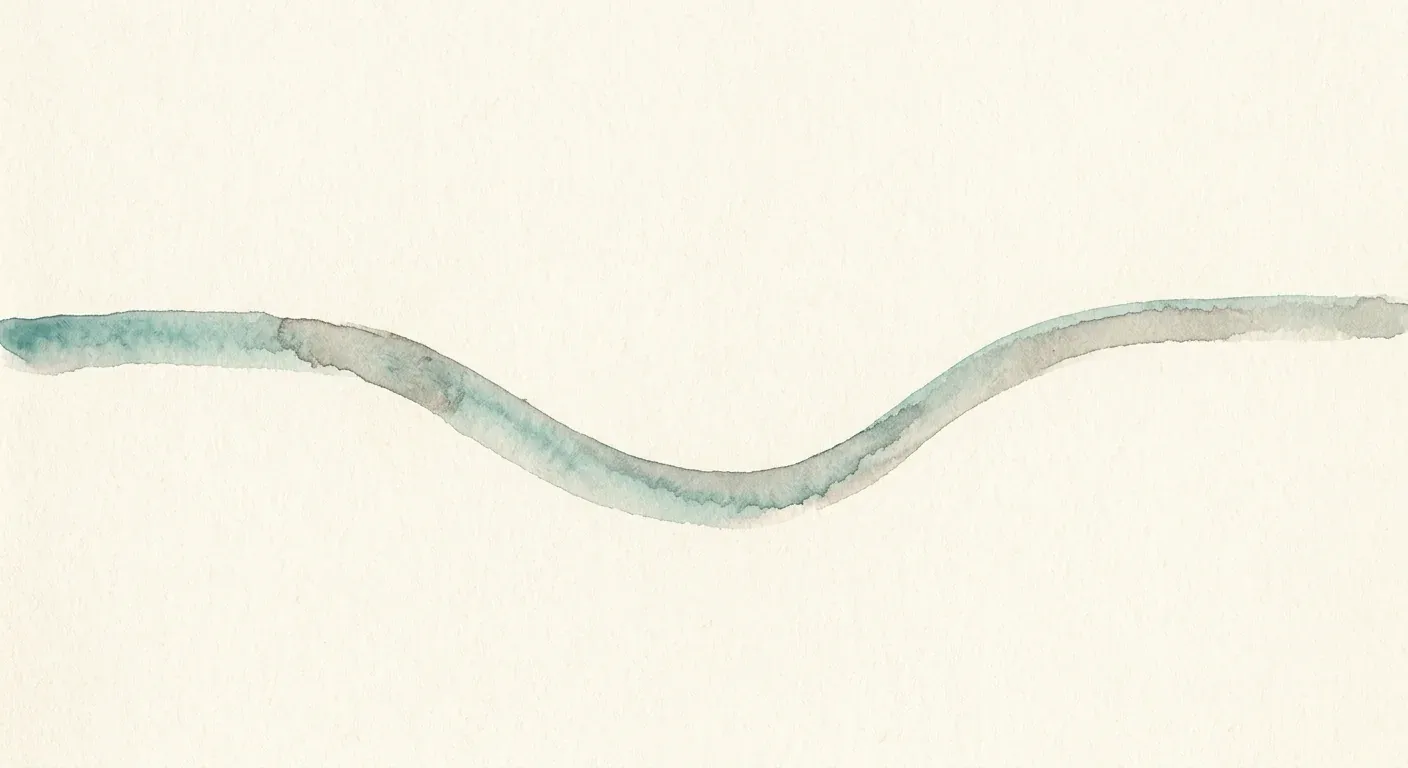
Acute telogen effluvium follows a curve: a trigger, a dip, and — once the trigger clears — a return to baseline over several months.
When it is not just telogen effluvium
A few patterns mean the shedding deserves a closer look:
- Patchy, coin-sized bald spots — that is alopecia areata, an autoimmune condition, not TE.
- A scaly, red, itchy, or tender scalp — points to an inflammatory scalp condition; TE itself does not inflame the scalp.
- Shiny, smooth patches where the follicle openings have disappeared — suggests a scarring alopecia, which is urgent because scarred follicles do not recover.
- A clearly patterned recession or a widening part that does not recover — androgenetic alopecia, which needs treatment rather than reassurance.
- Shedding longer than 6 months with no trigger — worth a dermatologist’s assessment even though chronic TE itself is benign.
TE is common and benign, but “diffuse shedding” is also how several other conditions begin. If the picture does not fit the classic story — a trigger, a diffuse shed, a recovery — get it assessed.
The bottom line
Telogen effluvium is frightening out of proportion to its danger. It arrives suddenly, it sheds dramatically, and then — in the great majority of cases — it quietly resolves. The follicles were never lost; they were synchronised into rest by something the body went through two or three months earlier. Find that something, correct it if it is correctable, and give the hair the months it needs to rebuild. The most evidence-based response to acute TE is not a product. It is an explanation and a calendar.
What to read next
- The Hair Growth Cycle Explained (2026) — the anagen / catagen / telogen biology that telogen effluvium hijacks.
- Postpartum Hair Loss Recovery (2026) — the most common form of telogen effluvium, in depth.
- The Norwood Scale Explained (2026) — for ruling in or out the pattern hair loss that can hide beneath a shed.
- DHT and Hair Loss Explained (2026) — androgenetic alopecia, the progressive condition TE is most often confused with.
References
[1] Headington JT. “Telogen effluvium. New concepts and review.” Arch Dermatol. 1993;129(3):356-363.
[3] Malkud S. “Telogen Effluvium: A Review.” J Clin Diagn Res. 2015;9(9):WE01-WE03.
[5] Hughes EC, Syed HA, Saleh D. “Telogen Effluvium.” StatPearls. Updated 2024.
Disclaimer: This article is educational, not diagnostic. Sudden or persistent hair shedding can have several causes, some of which need prompt treatment. A board-certified dermatologist can confirm telogen effluvium, order the right bloodwork, and rule out the conditions that mimic it. Use this guide to have a better-informed conversation, not to replace one.