Pumpkin Seed Oil for Hair Loss: What the 24-Week RCT Showed (2026)
📌 TL;DR
- Cho 2014 double-blind RCT (n=76, 24 weeks): 400 mg/day pumpkin seed oil → +40% hair count vs +10% placebo. Best methodology of any natural-supplement AGA trial.
- Mechanism: Δ7-sterols (especially Δ7-stigmasterol) and beta-sitosterol weakly inhibit 5α-reductase — same target enzyme as finasteride and saw palmetto.
- Best evidence-to-cost ratio of any natural AGA supplement. ~$10–15/month for trial-grade dose.
- Pairs naturally with saw palmetto (different sterol profiles, both 5α-reductase-targeting). Theoretically synergistic; no head-to-head data yet.
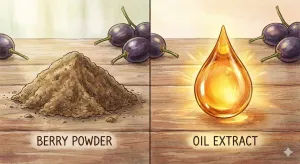
- Effective form: cold-pressed pumpkin seed OIL (softgels), not pumpkin seed powder. Trial used standardized oil at 400 mg/day.
Pumpkin Seed Oil for Hair Loss: What the 24-Week RCT Showed (2026)
Last updated: May 2026 | Written by RK
Pumpkin seed oil sounds like the kind of “natural remedy” that gets recommended on Reddit by people who’ve never read a study. So when I started researching it, I expected weak evidence and confident claims.
What I actually found: the single best-designed RCT for any natural AGA supplement. Cho et al. 2014 — randomized, double-blind, placebo-controlled, 24-week trial in 76 men. The methodology beats most of the saw palmetto literature. The result was a 40% hair count increase in the oil group vs 10% in placebo.
That’s not a miracle drug. But it’s a meaningful effect for something that costs $10–15/month, has placebo-level side effects, and works on the same enzyme as finasteride. This article is the breakdown.
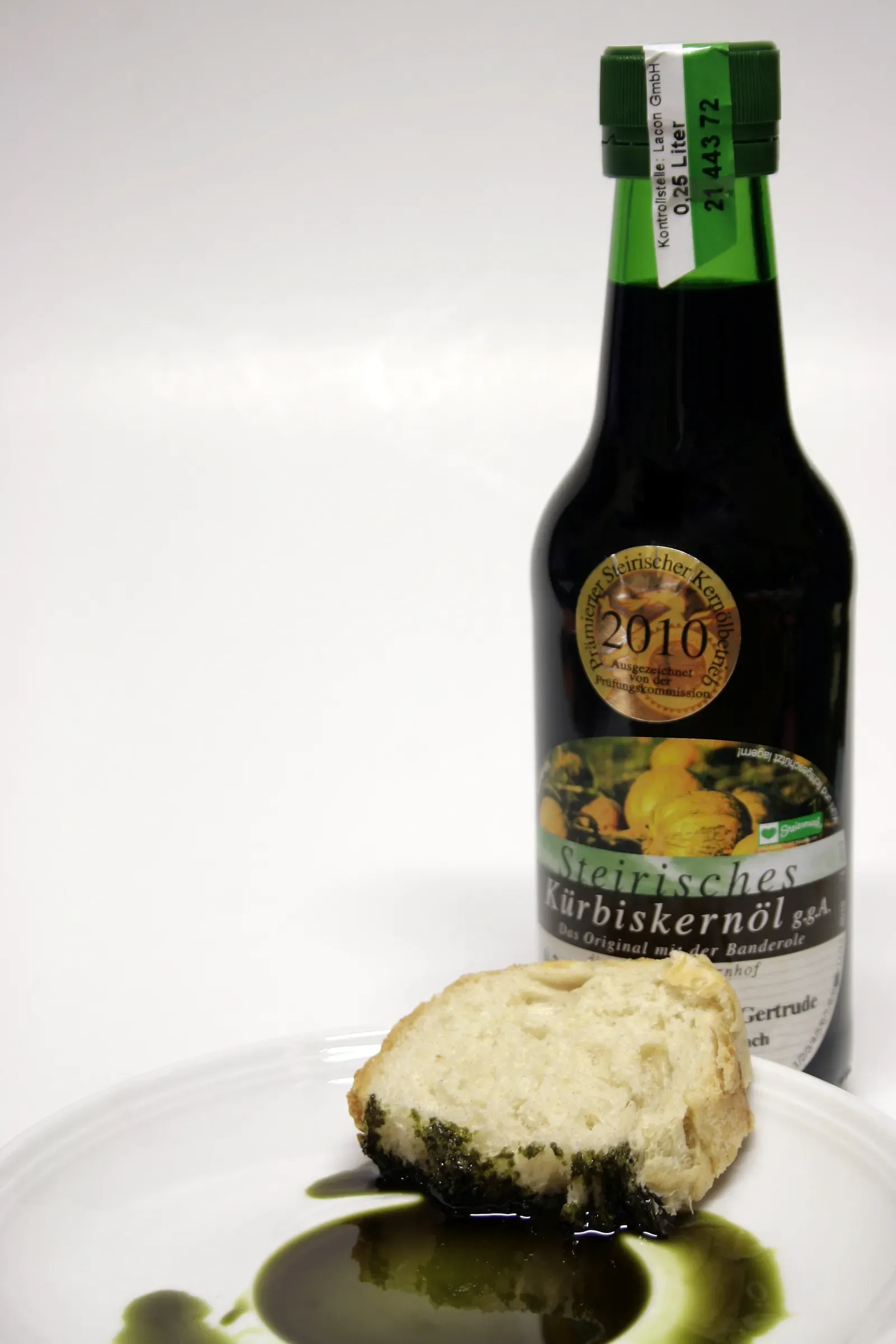
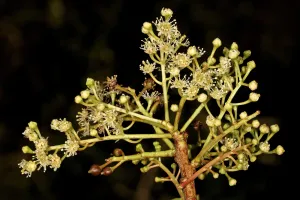
Photo: Wolf32at via Wikimedia Commons (CC BY-SA 3.0).
Multi-source evidence verdict
Before the trial deep dive, here’s the independent verdict from 14 parallel sub-agents reviewing FDA, EFSA, NHS, WHO, NIH ODS, Mayo, Cleveland, Harvard, AAD, and PubMed. The system grades pumpkin seed oil for AGA as C — Weak Evidence: the Cho 2014 RCT is methodologically strong, but no independent group has replicated it in the 12 years since — that’s the key reason it doesn’t reach B-tier yet:
Pumpkin Seed Oil for Androgenetic Alopecia
CLM-COND-androgenetic-alopecia-INT-pumpkin-seed-oil-001
Mechanism plausible + scattered human studies; "insufficient evidence".
- U.S. FDA — stance: neutral
"PUMPKIN SEED OIL — CAS Registry Number: 8016-49-7 — Regulatory Citation: 175.300"
Source → - EFSA (EU) — stance: against
"a cause and effect relationship has not been established between the consumption of a combination of thiamin, riboflavin, niacin, pantothenic acid, pyridoxine, D-biotin and pumpkin seed oil (Cucurbita pepo L.) and maintenance of normal hair"
Source → - PubMed (NIH)
"Effects of dietary supplements on androgenetic alopecia: a systematic review and network meta-analysis"
Source → - PubMed (NIH)
"Evaluation of the Safety and Effectiveness of Nutritional Supplements for Treating Hair Loss: A Systematic Review"
Source → - PubMed (NIH)
"Effect of Pumpkin Seed Oil on Hair Growth in Men with Androgenetic Alopecia: A Randomized, Double-Blind, Placebo-Controlled Trial"
Source → - PubMed (NIH)
"Pumpkin seed oil vs. minoxidil 5% topical foam for the treatment of female pattern hair loss: A randomized comparative trial"
Source →
The rest of this article unpacks Cho 2014 in full, compares PSO to other AGA treatments, and walks through how to actually buy a working product.
What pumpkin seed oil is
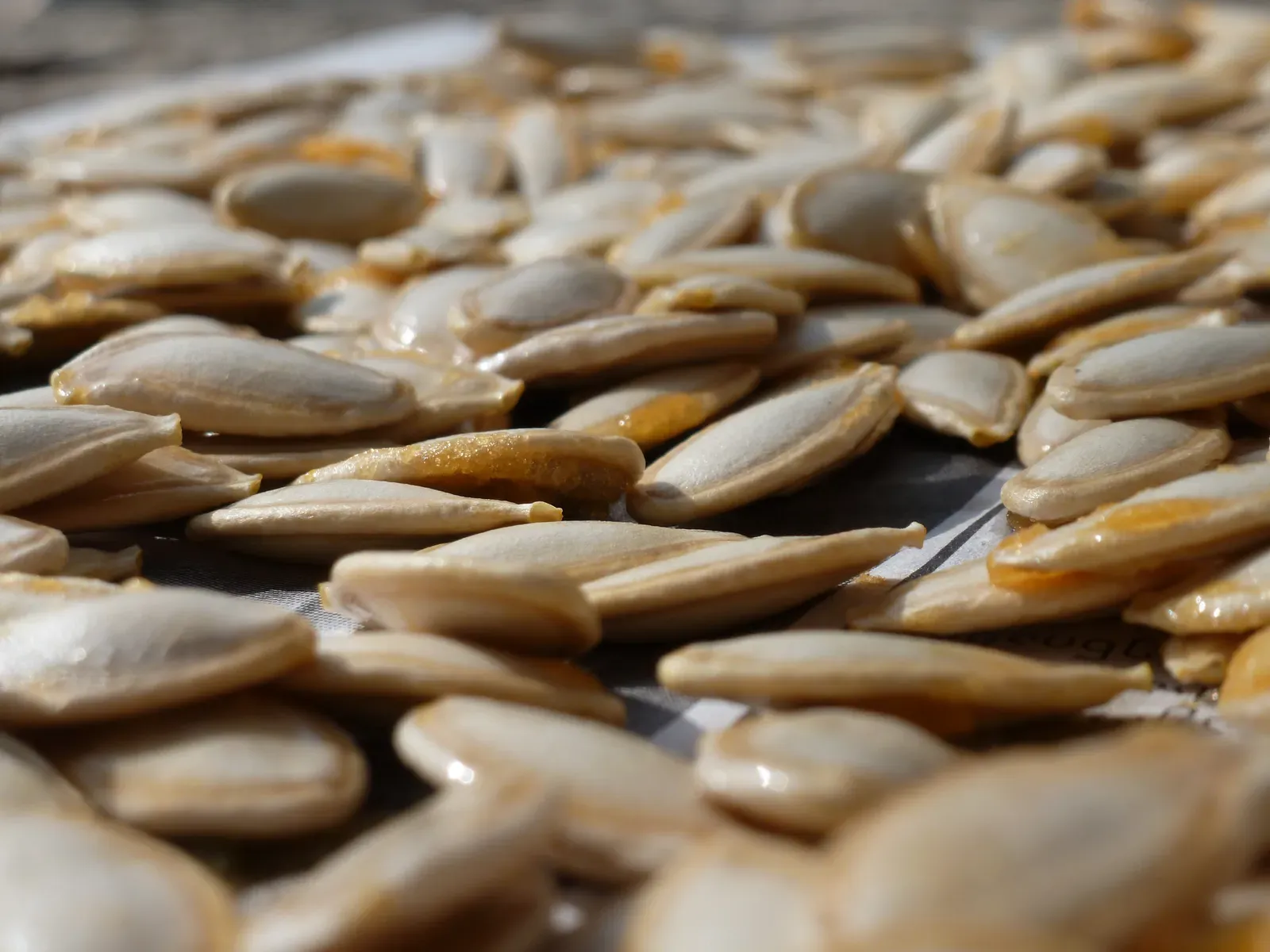
Photo: Konstantine Gagua, Wikimedia Commons (CC BY 4.0).
Pumpkin seed oil (PSO) is cold-pressed from the seeds of Cucurbita pepo — the same plant that produces edible pumpkins, with seed oil traditionally used in Central European cuisine and folk medicine. The oil is concentrated in:
- Δ7-sterols (especially Δ7-stigmasterol) — believed to be the primary 5α-reductase inhibitors
- Beta-sitosterol — another phytosterol with weak DHT-blocking activity
- Linoleic acid + oleic acid — fatty acids that enhance sterol delivery
- Cucurbitin — an amino acid that may play a supporting anti-androgen role
- Zinc, magnesium, vitamin E — micronutrients with general hair-supportive functions
The 5α-reductase inhibition pathway is what makes PSO clinically interesting for AGA. Same target enzyme as:
- Finasteride (synthetic, 70% scalp DHT reduction)
- Saw palmetto (fatty acid extract, 50–60% of finasteride strength)
- Pumpkin seed oil (sterol extract, weaker than saw palmetto but additive)
For background on why blocking 5α-reductase helps hair, see DHT and Hair Loss: How It Works.
The Cho 2014 trial — what it actually showed
This is the trial everyone cites, and unlike Rossi’s open-label saw palmetto study, this one is methodologically clean.
Setup (Cho et al. 2014, Evidence-Based Complementary and Alternative Medicine) [1]:
- 76 male patients with mild-to-moderate androgenetic alopecia (Norwood–Hamilton II–V)
- Randomized 1:1 → PSO group (n=37) or placebo group (n=39)
- 400 mg/day cold-pressed pumpkin seed oil capsules
- 24 weeks duration
- Double-blind, placebo-controlled — both patients and assessors blinded
- Primary outcomes: blinded photographic assessment, patient self-rated improvement and satisfaction, scalp hair thickness, scalp hair counts
Results at week 24:
Methodology caveats worth flagging: n=76 is small, single-center (Pusan National University, South Korea), and not yet replicated by an independent research group. The effect size (+40% vs +10%) is large but should be read as “directionally robust, magnitude approximate.” A 2015 published comment [2] raised some methodological concerns about the trial, but the primary endpoint findings remain accepted in the literature. One well-designed RCT
What the +40% number actually means
If your baseline hair count in a 1 cm² scalp patch is 100 hairs (typical for thinning AGA), a +40% gain is +40 hairs to 140 hairs after 24 weeks. That’s clinically meaningful but not a transformation — it brings a thinning crown closer to youthful density without restoring it fully. Same broad order of magnitude as 5% topical minoxidil, smaller than finasteride’s typical effect at 12 months.
How PSO compares to other AGA treatments
Honest framing: PSO alone is weaker than finasteride alone. PSO + saw palmetto + minoxidil + microneedling is a reasonable “no prescription drugs” stack that gets close to finasteride-monotherapy results — and that’s the stack many finasteride-averse users actually run.
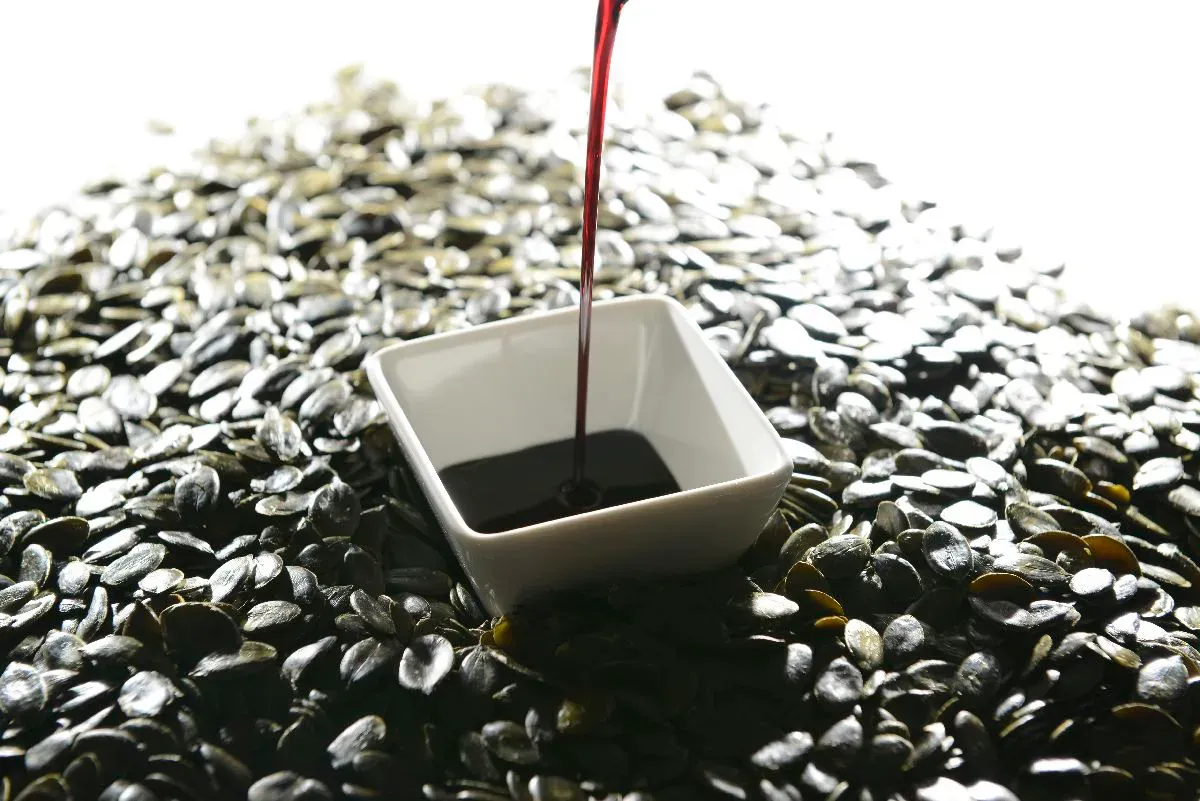
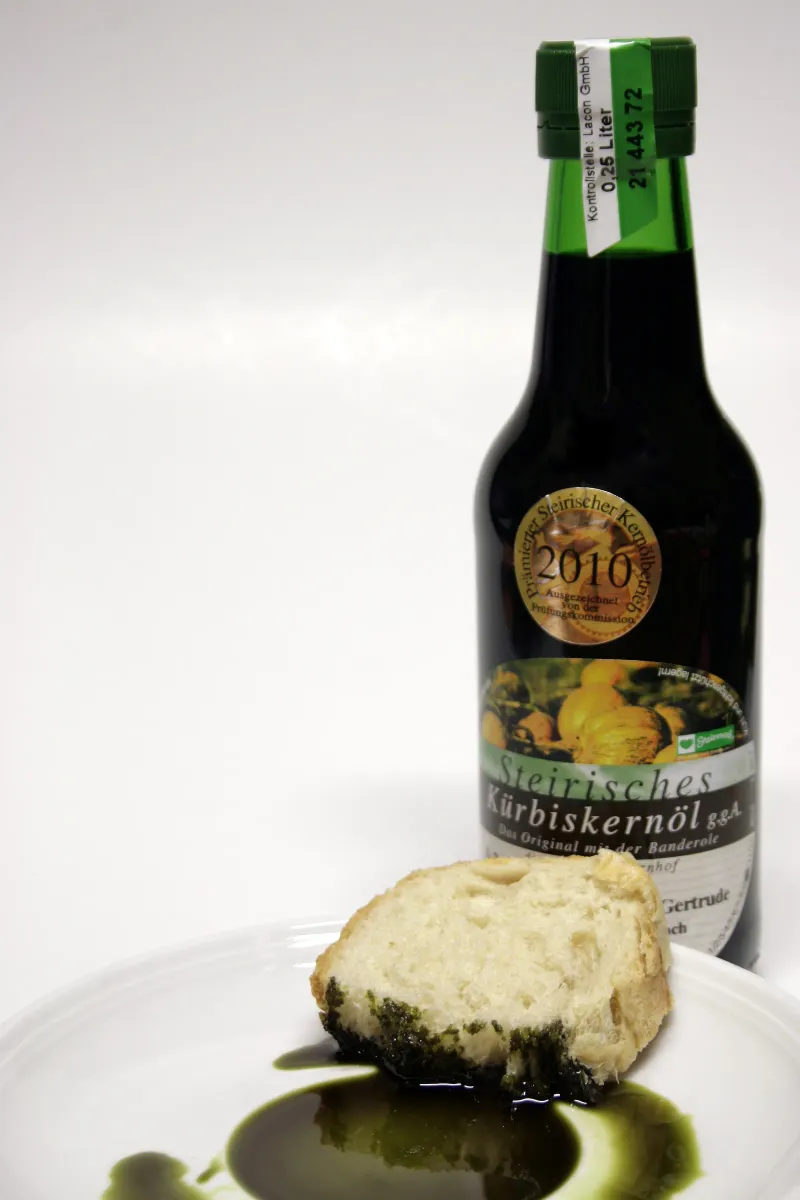
Photo: kernoel.cc via Wikimedia Commons (CC BY-SA 4.0).
How to choose a pumpkin seed oil product
Most of the products on Amazon that say “pumpkin seed” are aimed at urinary tract / prostate health, not hair loss. They mostly contain the same active compounds, but the dosing and form vary widely.
1 Form: cold-pressed oil in softgels (not seed powder, not hard capsules)
2 Dose: per softgel, typically 500–1000 mg pumpkin seed oil (you’ll take 1 softgel/day to hit ~400–500 mg active)
3 Source country: Austria or Styria (highest quality cold-pressing tradition); else verify cold-pressed on label
4 Avoid: pumpkin seed powder (“blends”), products that don’t list mg/serving of OIL specifically
5 Bonus: third-party tested (USP, NSF, ConsumerLab) — uncommon for botanical extracts but worth seeking
A bottle that says “Pumpkin Seed 1000 mg, 90 capsules” without specifying “oil” or “cold-pressed” is probably mostly fiber. Skip it.
Where to find these supplements
Cold-pressed pumpkin seed oil softgels are easy to find at major pharmacies (CVS, Walgreens), Amazon, iHerb, and brand websites. Brands commonly recommended in the hair-loss community include Now Foods, Swanson, Natural Factors, and Sports Research — all in the $10–15/month range for the trial-tested 400 mg/day dose.
For the strongest evidence-based stack: combine with standardized saw palmetto (320 mg/day). Some manufacturers offer combo softgels containing both at the trial-tested doses.
Dosage and timing protocol
Dose 400 mg/day cold-pressed PSO (1 softgel of the typical 500–1000 mg products gives this much active oil)
Timing With a meal containing some fat — sterols are fat-soluble and absorb better with dietary fat
Trial length 6 months minimum before judging effect (matches Cho 2014 endpoint)
Tracking Photo same scalp angle and lighting every 90 days
Stack Pairs naturally with saw palmetto (different sterol profiles, same enzyme target)
Stacking PSO with other treatments
PSO is rarely the only treatment users run. Reasonable stacks:
Who should NOT take pumpkin seed oil
❌ Pumpkin allergy
Rare but real. Cucurbit-family allergies (cucumber, melon, squash) can extend to pumpkin seed.
⚠️ Pregnant or breastfeeding
Insufficient safety data. Same theoretical concern as other 5α-reductase modulators — DHT is required for normal fetal development. Avoid during pregnancy.
⚠️ On finasteride or dutasteride already
Probably redundant. Your DHT is already 70%+ blocked by the prescription drug. PSO’s incremental contribution is small.
⚠️ On strong anticoagulants
PSO has mild antiplatelet activity (similar to fish oil). If you’re on warfarin or other strong anticoagulants, discuss with prescriber. Routine NSAIDs are fine to combine.
The decision card
Best for: mild AGA, finasteride-averse, building a no-Rx stack
Norwood 1–2 (early temple recession or crown thinning, not yet noticeable to most people). Pair with saw palmetto and topical minoxidil for the strongest non-prescription combination.
Marginal for: moderate AGA progressing fast
Norwood 3+ with visible loss in the past 12 months. PSO can be part of the stack but shouldn’t be the centerpiece — the stronger DHT blockers (finasteride, dutasteride) move the needle more.
Skip if: you’re already on finasteride or dutasteride
The strong Rx DHT blockers already achieve what PSO partially does. Adding PSO is unlikely to provide meaningful additional benefit.
What to read next
- Saw Palmetto for Hair Loss (2026) — the natural complement. Both work on 5α-reductase via different molecules. Most natural-stack users run both together.
- DHT and Hair Loss: How It Works — the mechanism foundation. Read this if you want to understand why blocking DHT helps.
- Best Hair Loss Treatments in 2026 — the decision tree showing where PSO fits in the broader treatment landscape.
- Minoxidil for Hair Loss: The Complete Guide (2026) — the topical that pairs with PSO via a different mechanism.
- Saw Palmetto vs Finasteride (2026) — how natural 5α-reductase inhibitors stack up against the drug.
- Rosemary Oil vs Minoxidil (2026) — another natural option with one real head-to-head trial.
- Best Hair Loss Treatments (2026) — placing PSO against the proven options.
References
Disclaimer: This article is personal research and review. It is not medical advice. Pumpkin seed oil is a 5α-reductase modulator and shares mechanism with finasteride and saw palmetto. Before starting it — especially if you’re pregnant, on hormonal medication, on anticoagulants, or have a hormone-sensitive condition — consult a licensed physician. Stop and seek evaluation if you experience any unexpected symptoms.