GHK-Cu Copper Peptide for Hair Loss: What the Evidence Actually Says (2026)
📌 TL;DR
- GHK-Cu (glycyl-histidyl-lysine + copper) is a real molecule with strong evidence in WOUND HEALING and skin regeneration. The hair growth evidence is much thinner than the marketing suggests.
- Only one randomised human trial exists that's directly relevant: Lee 2016 (45 enrolled, AGA men). It used GHK + 5-aminolevulinic acid (5-ALA) combined — and the GHK in it was copper-FREE. So even this trial doesn't isolate GHK-Cu's effect.
- Lee 2016 results: hair count rose by 52.6 (high dose) and 71.5 (low dose) over placebo's 9.6 at 6 months. Note the dose paradox — lower dose worked better, suggesting noise from small per-arm groups (n=14-15). No effect on hair length or thickness.
- The Pyo 2007 in-vitro study cited everywhere as 'GHK-Cu evidence' is actually on AHK-Cu (alanyl-histidyl-lysine), a different tripeptide. Be aware when reading marketing pages.
- Loren Pickart, who discovered GHK in 1973, runs Skin Biology — the company that sells Folligen, a GHK-Cu hair product. His 2018 review claims GHK 'increases hair growth' without citation. This is a commercial conflict to acknowledge.
- Position: experimental tier — below saw palmetto, PSO, tocotrienols. Reasonable to try if you've maxed out evidence-based options and want to add one more shot on goal. Not a replacement for minoxidil, finasteride, or microneedling.
GHK-Cu Copper Peptide for Hair Loss: What the Evidence Actually Says (2026)
Last updated: May 2026 | Written by RK
If you’ve been on r/tressless or shopped on Amazon for hair-loss treatments, you’ve seen “copper peptide” serums everywhere. The pitch is usually: natural, gentle alternative to minoxidil, regrows hair by stimulating follicle stem cells, no side effects. Some products charge $80-120 per bottle for what’s essentially saline plus a tiny amount of GHK-Cu.
The molecule is real — GHK-Cu has 50 years of legitimate research behind it in wound healing and skin regeneration. The question this article answers honestly: how strong is the evidence specifically for hair regrowth in humans?
The short answer: thinner than the marketing suggests, and three specific evidence-quality issues are worth knowing about before you spend money.
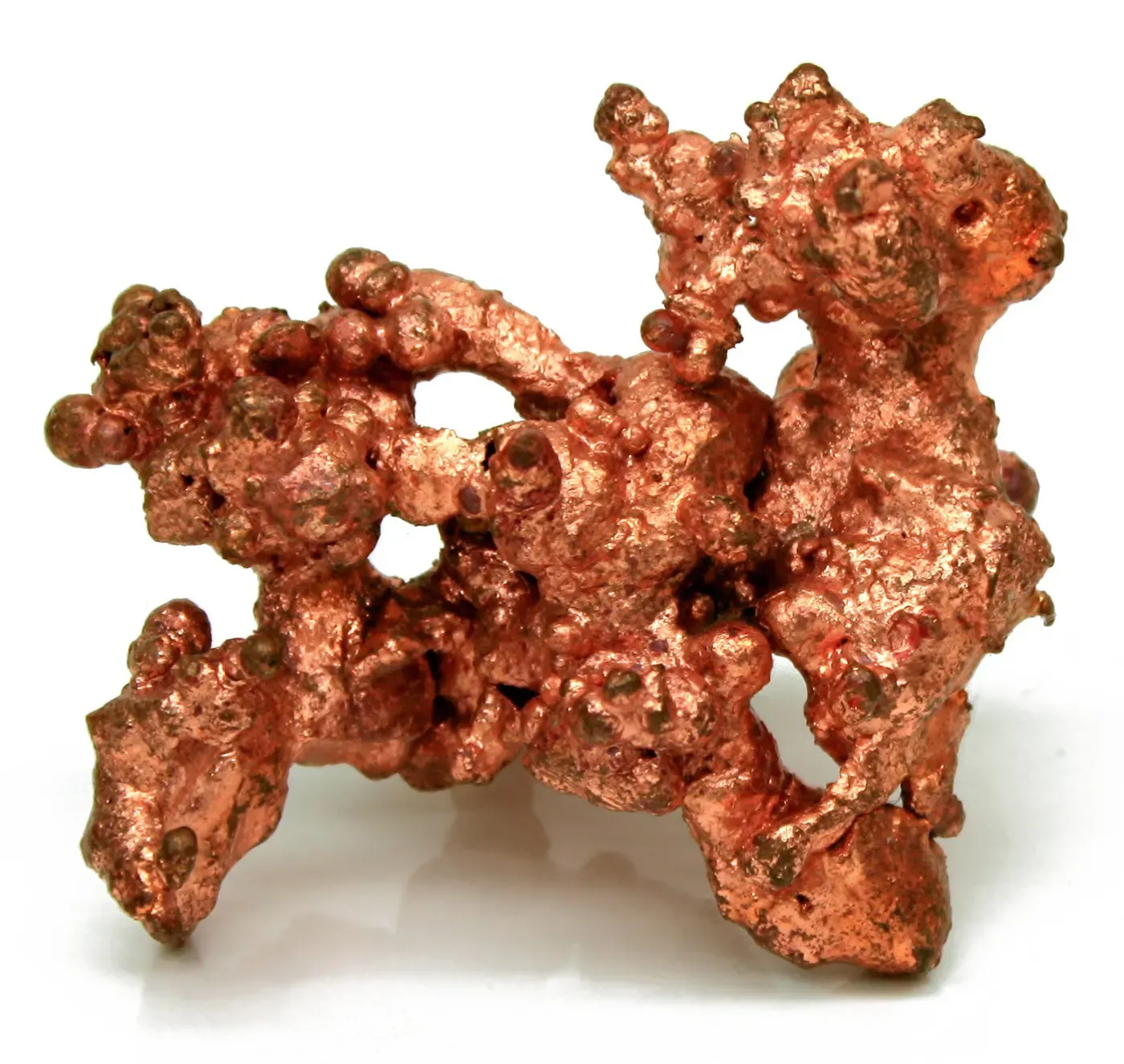
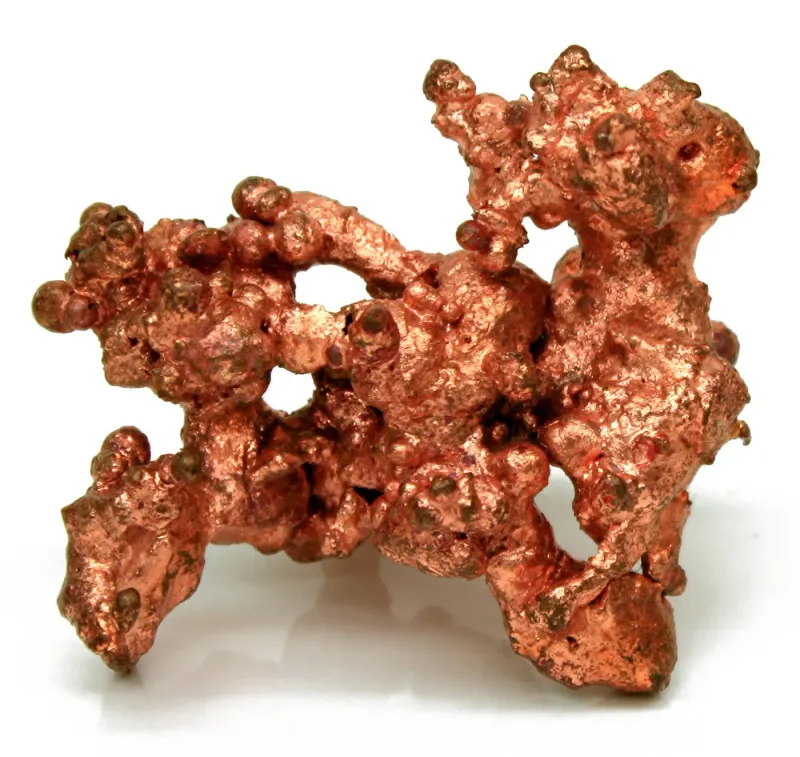
Photo: Jonathan Zander / Materialscientist via Wikimedia Commons (CC BY-SA 2.5/3.0). Native copper, the element that gives copper peptides their distinctive blue colour and reactive chemistry.
TL;DR
- One direct human RCT exists: Lee et al. 2016 (45 enrolled, AGA men). It used GHK + 5-ALA combined, and the GHK was copper-free — not GHK-Cu. Modest hair-count increase (52-71 hairs/area) vs placebo (9.6) at 6 months. No effect on length or thickness.
- The Pyo 2007 in-vitro study cited everywhere is on AHK-Cu (alanyl-histidyl-lysine), not GHK-Cu (glycyl-histidyl-lysine). Different molecule.
- The 1993 Uno & Kurata animal study used a related copper peptide (PC1031) in fuzzy rats — not GHK-Cu in humans.
- Loren Pickart, the discoverer, runs Skin Biology, which sells Folligen — direct commercial conflict on hair claims.
- Position: experimental tier. Try only after maxing out minoxidil, DHT-blockers, and microneedling.
What GHK-Cu actually is
GHK is a tripeptide: glycine-histidine-lysine. Three amino acids in sequence. Loren Pickart isolated it from human plasma in 1973 — he found that older blood plasma was less effective than younger plasma at stimulating fibroblast cultures, and traced the difference to declining levels of this small peptide.
Add a copper ion (Cu²⁺), and you get GHK-Cu — a copper-binding peptide complex. The copper coordinates with the histidine residue, giving the complex its characteristic blue colour and putting copper in a bioavailable form for cellular delivery.

GHK-Cu structure by Edgar181 (Public Domain). Copper coordinates primarily with the imidazole ring of histidine and amide nitrogens of the peptide backbone.
What GHK-Cu has been shown to do (mostly in skin / wound healing):
- Stimulate fibroblast collagen production — multiple in-vitro and small clinical studies
- Promote angiogenesis — increased VEGF expression in wound models
- Reduce inflammation — affects gene expression of inflammatory mediators
- Modulate ~30% of human genes — Pickart 2018 review, based on Connectivity Map analysis
This is real science. Whether any of it translates to scalp hair growth in adult humans is the separate question.
The actual hair growth evidence — three specific quality issues
When you read a “GHK-Cu for hair” article on a supplement vendor’s site, the citations almost always trace back to three studies. Each has a precise issue worth knowing.
Issue 1: The most-cited human trial used copper-free GHK
Lee WJ et al. Efficacy of a Complex of 5-Aminolevulinic Acid and Glycyl-Histidyl-Lysine Peptide on Hair Growth. Annals of Dermatology 2016;28(4):438-443.
This is the only randomised, double-blind, placebo-controlled trial of a GHK-containing topical for AGA. Design:
- 45 men enrolled with male pattern hair loss (Norwood-Hamilton II–V); 43 completed across the 3 arms
- 3 arms: ALAVAX 100 mg/ml (n=15), ALAVAX 50 mg/ml (n=14), placebo (n=14)
- Once-daily topical spray, 6 months
- Primary outcome: hair count in a 1 cm² frontal scalp area
Results:
| Group | Hair count change at 6 months | p-value |
|---|---|---|
| ALAVAX 100 mg/ml (high dose) | +52.6 | p < 0.05 vs placebo |
| ALAVAX 50 mg/ml (low dose) | +71.5 | p < 0.05 vs placebo |
| Placebo | +9.6 | (not significant) |
The chart makes the dose paradox visible — the lower dose outperformed the higher dose, which usually signals noise from small per-arm samples (n=14-15) rather than a clean dose-response.
Three things to notice:
First — and this is the critical one — ALAVAX is 5-ALA + GHK peptide. You can’t tell from this trial whether GHK is doing the work, 5-ALA is doing the work, or the combination matters. Marketing pages that cite this trial as “GHK-Cu evidence” are eliding the 5-ALA half of the formula.
Second — the GHK in this trial was copper-free. The paper explicitly states it’s GHK peptide, not GHK-Cu. So even if the GHK component is the active one, you can’t directly attribute the result to GHK-Cu (the copper-bound form most commercial serums use).
Third — the dose-paradox. The lower-dose group (50 mg/ml) outperformed the higher-dose group (100 mg/ml) by 36%. With n=14-15 per arm, this is exactly the kind of result that suggests substantial noise rather than a clean dose-response. A larger replication trial has not happened in the 9 years since.
The trial is real evidence. It’s just not the slam-dunk evidence that marketing presents.
Issue 2: The “Pyo 2007 in-vitro study” was on a different peptide
You’ll see Pyo HK et al. 2007 cited constantly: “The effect of tripeptide-copper complex on human hair growth in vitro”, Archives of Pharmaceutical Research.
It’s a real and well-conducted study. The catch: it tested AHK-Cu (alanyl-histidyl-lysine + copper), not GHK-Cu (glycyl-histidyl-lysine + copper). The two peptides differ by one amino acid — alanine instead of glycine — and that’s enough to make them pharmacologically distinct molecules.

GHK structure (without copper) by Edgar181 (Public Domain). The lysine side chain on the right binds the copper ion in GHK-Cu; the imidazole of histidine in the middle is the primary copper coordination site.
What Pyo 2007 actually showed:
- AHK-Cu at 10⁻¹² to 10⁻⁹ M stimulated elongation of human hair follicles in ex-vivo organ culture
- AHK-Cu promoted dermal papilla cell proliferation
- AHK-Cu reduced apoptosis (cleaved caspase-3 and PARP) in cultured cells
Useful data for AHK-Cu. Not direct evidence for GHK-Cu. When a supplement page cites “Pyo 2007” under a GHK-Cu product description, treat it as a yellow flag for evidence rigour.
Issue 3: The animal data is in fuzzy rats with a related, non-GHK peptide
Uno H, Kurata S. Chemical agents and peptides affect hair growth. Journal of Investigative Dermatology 1993;101(1 Suppl):143S-147S.
This is the original “copper peptide stimulates hair growth” paper that started the field. It tested PC1031, a synthetic copper-binding peptide developed by ProCyte (a company Pickart consulted with) — which is in the GHK family but is not GHK-Cu specifically.
The result, in fuzzy rats:
- PC1031 produced follicular enlargement comparable to topical minoxidil
- Vellus-to-terminal hair conversion in the treated area
Real and historically important. Two caveats: (1) it’s a 32-year-old animal study, not human; (2) PC1031 is a related-but-not-identical peptide. The “copper peptide is comparable to minoxidil” claim that recurs in marketing copy stretches this 1993 fuzzy-rat result well past what it can support for adult human AGA.
The Pickart commercial conflict
Loren Pickart, who isolated GHK in 1973, runs Skin Biology Inc. — the company that sells Folligen, a GHK-Cu topical positioned for hair loss. His 2018 review in Biomedicines, “Regenerative and Protective Actions of the GHK-Cu Peptide in the Light of the New Gene Data,” explicitly declares no conflict of interest. Given his decades-long commercial stake, that disclosure is at minimum incomplete.
The 2018 review claims GHK “increases hair growth and thickness, enlarges hair follicle size” — but this hair claim appears in the introduction’s list of effects without specific citation. Search the rest of the paper and you won’t find a primary trial supporting it. Most of the review’s depth is about wound healing, fibroblast biology, and gene expression — not hair.
This isn’t an accusation of fraud. Pickart’s broader work on GHK is widely cited and respected. But on the specific question of whether GHK-Cu grows scalp hair in adult humans with AGA, his reviews are not independent evidence — they’re the marketing-adjacent analyses of the molecule’s discoverer and seller. Treat them accordingly.
What the evidence actually supports for GHK-Cu in hair
Distilling everything above:
| Claim | Evidence quality |
|---|---|
| GHK-Cu accelerates wound healing | Strong Decades of skin/wound RCTs |
| GHK-Cu modulates fibroblast biology | Strong In-vitro / molecular |
| GHK + 5-ALA combo modestly increases hair count over 6 months | Moderate One trial, n=43, dose-paradox |
| GHK-Cu alone grows hair in humans with AGA | Weak No direct trial |
| GHK-Cu is comparable to minoxidil | Animal only Fuzzy rats, 1993 |
| GHK-Cu reverses miniaturisation | Mechanistic only Not in humans |
That’s the honest map. GHK-Cu sits in the same evidence tier as pygeum or rosemary oil — plausible mechanism, weak direct AGA data, mostly extrapolated from related-but-not-identical evidence.
Where it might still earn a place in your stack
Despite the evidence gap, GHK-Cu isn’t useless. Three reasons it can earn a slot:
- Mechanism plausibility is genuine — angiogenesis, fibroblast effects, dermal papilla proliferation in vitro. The biology is consistent with what would help follicles.
- Safety profile is benign — topical, low systemic absorption, no DHT-pathway interference.
- Stacking with proven actives is straightforward — apply at night when minoxidil isn’t being used, or alternate days. No known antagonism with minoxidil or finasteride.
The realistic positioning is: a third- or fourth-tier add-on for users who’ve already optimised primary therapy and want one more “shot on goal” with low risk.
Not where you start. Not what you replace minoxidil with. Not the “natural breakthrough” some sites claim.
Cost and product reality
GHK-Cu products vary widely:
| Product type | Typical price | Typical concentration |
|---|---|---|
| Skin Biology Folligen (Pickart’s brand) | ~$30/2 oz | Not always disclosed numerically |
| Mid-range hair serums (Hairgenetix, Neurogan, etc.) | $40-90 | Often 2-4% combined GHK-Cu + AHK-Cu |
| Generic (‘research-grade’) GHK-Cu powder + DIY | $10-20 | DIY at any concentration |
| Korean-brand combination scalp serums | $25-60 | Variable, sometimes opaque labelling |
The $80-120 “luxury copper peptide hair serum” tier is not buying you better evidence — it’s buying you packaging and marketing. If you want to try GHK-Cu, the value-tier products are functionally similar to the premium ones. Look for transparent concentration disclosure (1-5% is common), avoid products that obfuscate with proprietary blends, and run a forearm patch test before the scalp.
Stacking guidance
Compatible with:
- Minoxidil — apply at different times of day (e.g., minoxidil AM, GHK-Cu PM)
- Microneedling — some protocols apply GHK-Cu post-needling for absorption boost (rationale is mechanistic, not RCT-validated)
- Saw palmetto, finasteride, or any DHT blocker — separate mechanisms, no interaction
Avoid combining with:
- High-concentration vitamin C serums on the same area (ascorbic acid chelates copper, deactivating GHK-Cu)
- Strong AHA/BHA exfoliants directly before GHK-Cu (irritation amplification)
Decision card
Try GHK-Cu if all of these are true:
- You’ve been on minoxidil ± finasteride for 6+ months
- Stable but want to try one more low-risk topical add-on
- You can budget $20-50/month for an experimental tier
- You’ll evaluate honestly at 6 months with photos, not by feel
Skip GHK-Cu if any of these is true:
- You’re not yet on a proven first-line treatment
- You’re attracted by “natural minoxidil alternative” framing — that’s not what the evidence supports
- The cost would displace your spending on evidence-tier interventions
- You expect dramatic regrowth — even the best trial showed modest hair-count increase, no thickness change
Re-evaluate at 6 months. Compare standardised photos to baseline. If no visible improvement above what your primary treatments are doing, drop it.
Related reading
- Minoxidil complete guide — the proven-mechanism foundation that should sit underneath any peptide trial
- Microneedling guide — the strongest topical adjunct, often paired with copper peptides
- DHT and hair loss — why copper peptides don’t address the actual driver of AGA
- Saw palmetto for hair loss — better-evidenced natural option for the DHT axis
- Tocotrienols — another single-trial supplement, similar evidence weight
References
- Lee WJ et al. Efficacy of a Complex of 5-Aminolevulinic Acid and Glycyl-Histidyl-Lysine Peptide on Hair Growth. Annals of Dermatology 2016;28(4):438-443. PMC4969472.
- Pyo HK et al. The effect of tripeptide-copper complex on human hair growth in vitro. Archives of Pharmaceutical Research 2007;30(7):834-839. PMID 17703734. (AHK-Cu, not GHK-Cu.)
- Uno H, Kurata S. Chemical agents and peptides affect hair growth. Journal of Investigative Dermatology 1993;101(1 Suppl):143S-147S. (PC1031 in fuzzy rats.)
- Pickart L, Margolina A. Regenerative and Protective Actions of the GHK-Cu Peptide in the Light of the New Gene Data. Biomedicines 2018;6(2):46. PMC6073405. (Author conflict: Pickart owns Skin Biology / Folligen.)
- Pickart L. The human tri-peptide GHK and tissue remodeling. Journal of Biomaterials Science Polymer Edition 2008;19(8):969-988.
Published May 2026. This article is editorial review of published evidence — it is not medical advice. GHK-Cu is sold as a cosmetic, not a drug, and is not FDA-approved for hair loss. Most existing trials are small, short, or use combination formulas rather than isolated GHK-Cu. Patch-test before scalp use; discontinue and consult a dermatologist if irritation persists. For severe hair loss, a board-certified dermatologist remains the right starting point.