Low-Dose Oral Minoxidil (LDOM) in 2026: The Complete Dosing & Safety Guide
Why dermatologists now prescribe 0.25–5 mg minoxidil pills for hair loss, the actual dosing ladder, what 1,404 patients tell us about safety, and when LDOM is the wrong call.
7 articles
Why dermatologists now prescribe 0.25–5 mg minoxidil pills for hair loss, the actual dosing ladder, what 1,404 patients tell us about safety, and when LDOM is the wrong call.
The full side-effect profile of topical and oral minoxidil — dread shed, propylene glycol irritation, hypertrichosis, cardiac, cat toxicity — sorted by what RCTs actually report vs Reddit hearsay.
FPHL is the most-studied hair loss in women — and the most-misrepresented. Honest evidence on minoxidil, spironolactone, LDOM, and the blood panel that changes the diagnosis.
The only FDA-approved topical hair regrowth drug. How it works, what concentration, foam vs liquid, oral vs topical, side effects, and what to expect from month 1 to month 12.
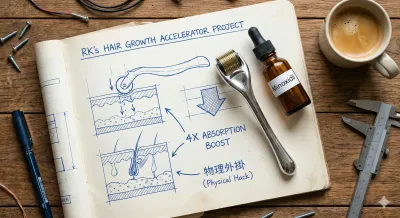
Combining a 1.5 mm dermaroller with topical minoxidil produced 4× more hair regrowth than minoxidil alone in the Dhurat 2013 RCT. Mechanism, needle length, protocol, and what the 2025 meta-analysis confirms.
There are five evidence-based treatments for androgenetic alopecia in 2026 — minoxidil, finasteride, dutasteride, microneedling, and saw palmetto. Here's how to pick the right combination for your case in under 10 minutes.
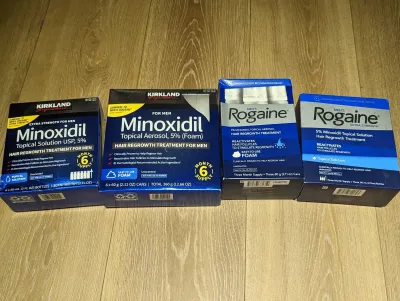
Both are 5% minoxidil with identical FDA-approved active ingredient. So why does Rogaine cost 3× more? A 3-year side-by-side from someone who tested both.